Portable Air Conditioner Guide 2026: Cool a Room Without Central Air
Portable air conditioners cool a single room in minutes with no permanent install. Here's how to size one correctly, single-hose vs dual-hose venting, drainage, and where Garvee's 3-in-1 portable AC lineup fits.
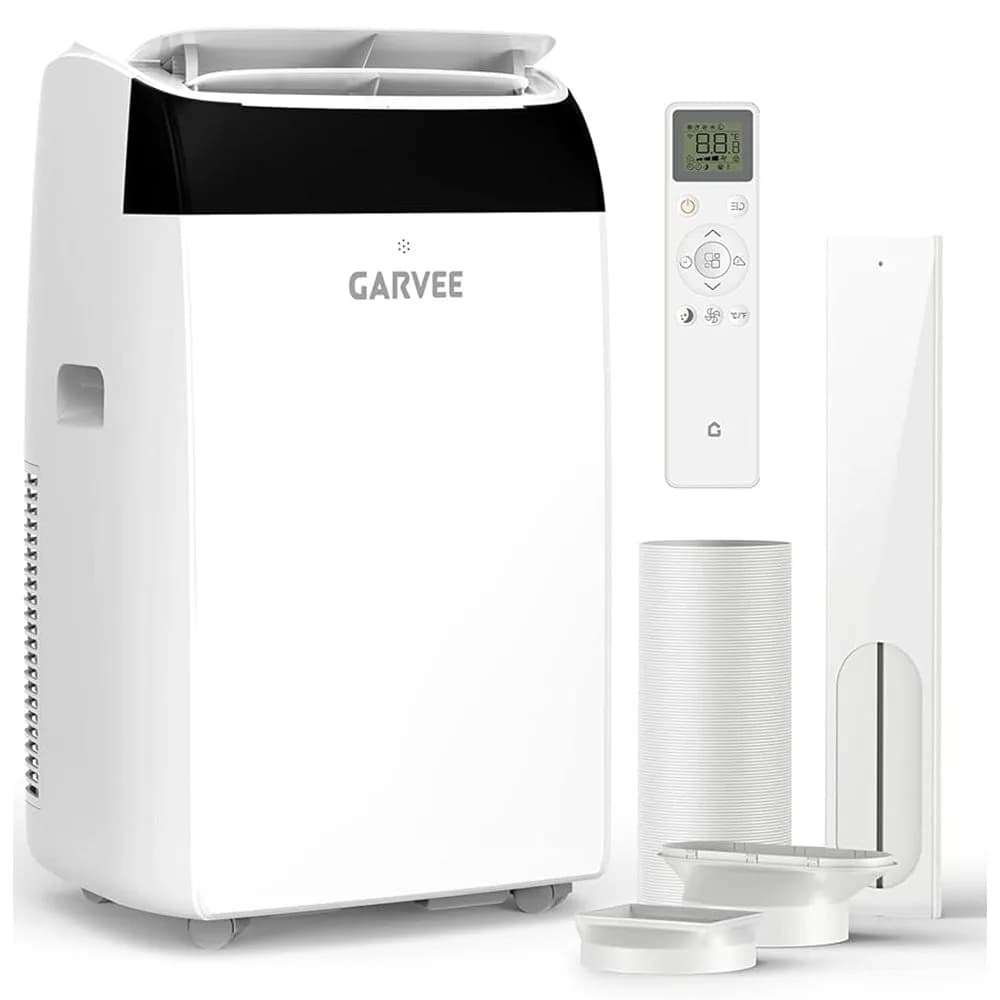
How a portable air conditioner works
A portable air conditioner is the fastest way to cool a single room without ductwork, a permanent install, or landlord approval — plug it in, run one hose out a window, and you have cold air in under 30 minutes. This guide covers how portable ACs actually work, how to size one correctly, single-hose versus dual-hose venting, drainage, and where Garvee's portable AC lineup fits if you want a flexible, 3-in-1 cooling option for a bedroom, home office, or rental.
Key takeaways
- Size by roughly 20 BTU per square foot of floor space, then adjust up for sun exposure and heat-generating appliances.
- Dual-hose units cool noticeably faster than single-hose models because they don't pull warm outside air back into the room.
- Most portable ACs install in well under 30 minutes with the included window kit — no special tools required.
- Portable ACs run 30–50% less efficiently than a comparable window unit — they trade some efficiency for install-free flexibility.
- Garvee's portable AC line runs 3-in-1 (cooling, fan, dehumidify) with up to 50 pints/day of moisture removal.
Garvee portable ACs are a strong pick when you need cooling that moves with you and installs in minutes.
If you need cooling now, can't modify a window permanently, or move between rooms or rentals, a portable air conditioner is the practical choice. If you're cooling the same room year-round, a window unit or mini-split will cost less to run.
Shop Garvee Portable ACsHow a portable air conditioner works
A portable air conditioner is a self-contained cooling unit on wheels: it pulls warm room air across a refrigerant coil, cools it, and blows it back into the room, while a flexible hose vents the heat (and, on single-hose units, some room air) outside through a window kit. There's no outdoor condenser to mount and no refrigerant lines to run, which is why portable ACs are the default choice for apartments, dorms, and any space where a window unit or mini-split isn't allowed.
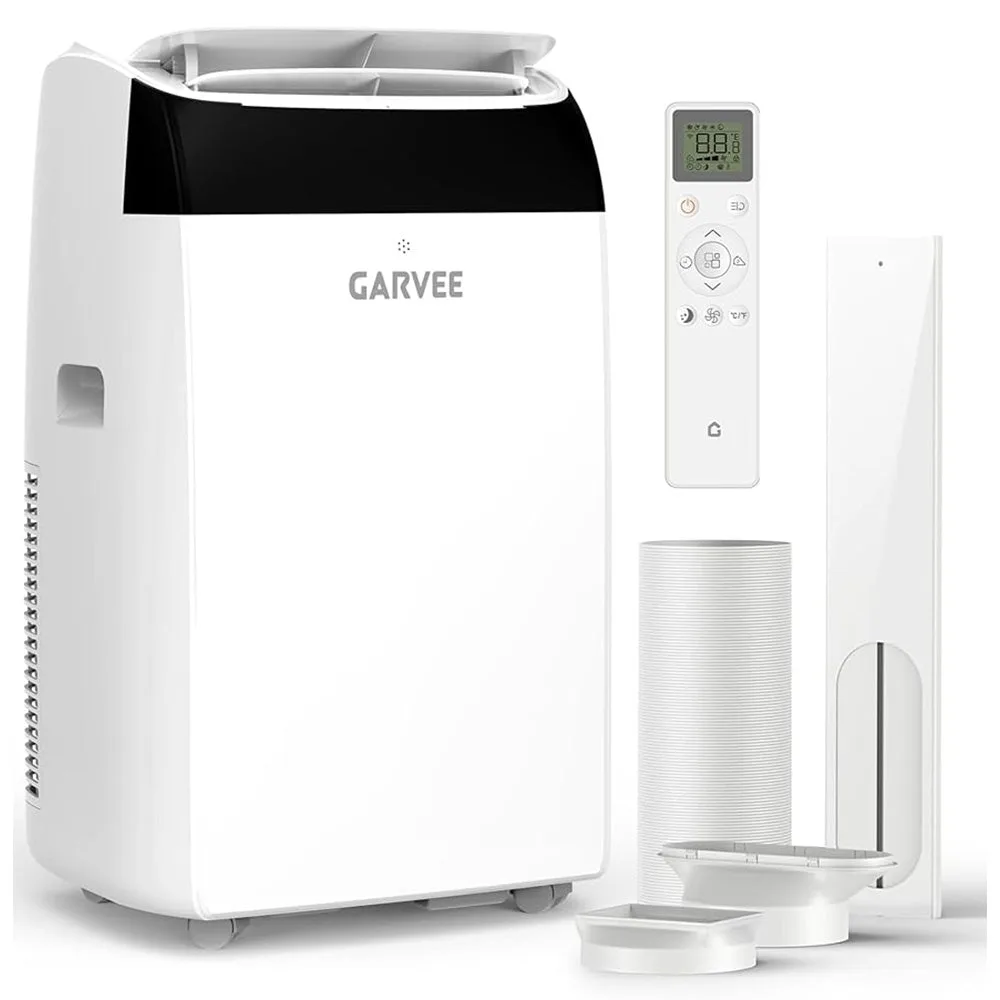
Inside, the compressor and coils work the same way a window AC or mini-split does — the difference is entirely in the venting and mobility. That flexibility is also the source of most of a portable AC's real-world limitations, from hose length to drainage, which is why sizing and hose configuration matter more here than with a fixed unit.
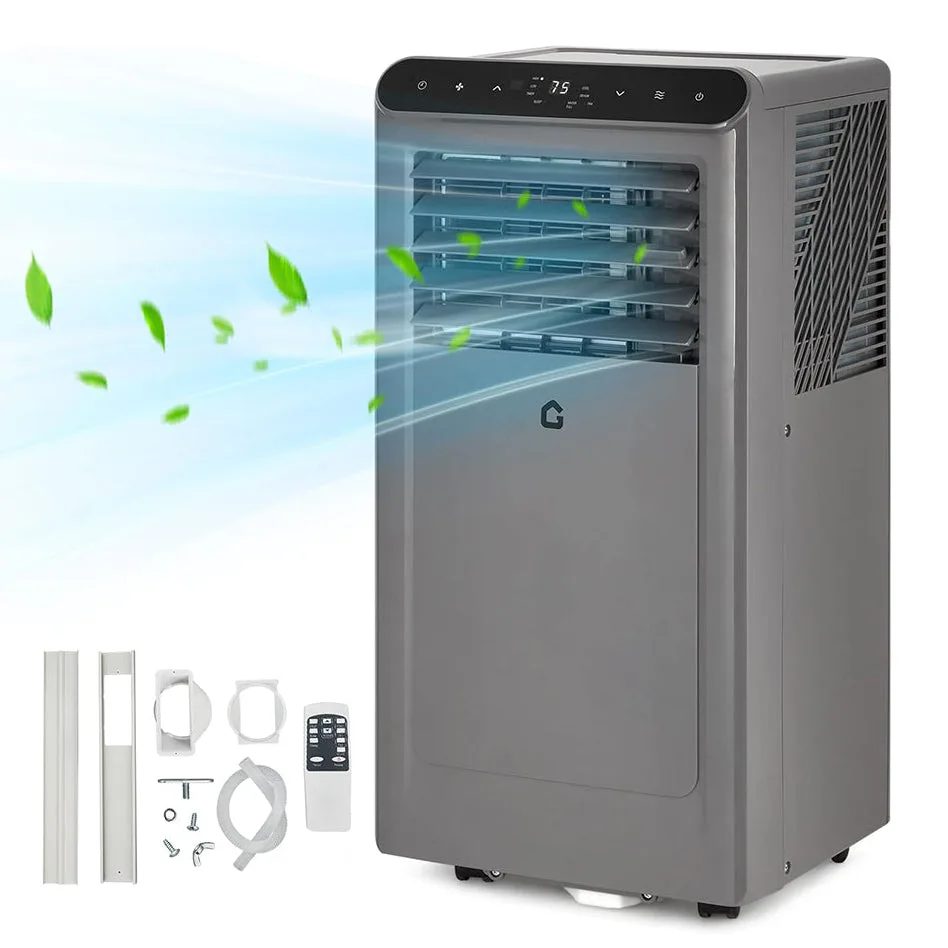
Garvee 10,000 BTU Portable AC
3-in-1 cooling, fan, and dehumidify modes with a 24-hour programmable timer — sized for rooms up to 450 sq ft.
Check Current AvailabilityBTU sizing by room
Undersize a portable air conditioner and it will run constantly without ever pulling the room down to temperature; oversize it and you'll get clammy, short-cycled air. The standard industry rule is about 20 BTU of cooling capacity per square foot of floor space in a room with an 8–9 foot ceiling. Push that number up if the room gets heavy afternoon sun, holds a lot of electronics or a kitchen appliance, or regularly has more than two people in it.
| Room size | Recommended BTU | Typical room example |
|---|---|---|
| 150–250 sq ft | 5,000–6,000 BTU | Small bedroom, home office |
| 250–350 sq ft | 7,000–8,000 BTU | Standard bedroom, studio apartment |
| 350–450 sq ft | 9,000–10,000 BTU | Living room, open studio |
| 450–700 sq ft | 12,000–14,000 BTU | Large living room, combined living/dining area |
This 20-BTU-per-square-foot formula is the same one HVAC sizing calculators use for room units generally, so it's a reliable starting point before you factor in sun exposure, ceiling height, and heat-generating appliances.
Single-hose vs dual-hose portable air conditioners
This is the single biggest performance difference between portable AC models, and it's often buried in the spec sheet. A single-hose unit draws its intake air from inside the room, which means every bit of air it exhausts outside has to be replaced by warm air leaking in around doors and windows — a mild vacuum effect that fights the cooling it just did. A dual-hose unit pulls its intake air from outside for the compressor and only exhausts through the second hose, avoiding that vacuum entirely.
| Feature | Single-hose | Dual-hose |
|---|---|---|
| Cooling speed | Standard | Roughly 40% faster to reach target temperature |
| Room pressure effect | Creates a mild vacuum, pulling in warm air | Neutral — no vacuum effect |
| Install complexity | One hose to window kit | Two hoses to window kit, slightly longer setup |
| Best for | Occasional or budget cooling | Hot climates, rooms that need fast recovery |
For most bedrooms and home offices, either configuration will cool the space eventually. If you're in a hot climate or cooling a room that heats up fast (a west-facing living room, for example), the dual-hose design's faster recovery and steadier temperature are worth the slightly longer install.
Venting and installation
Portable AC installation is genuinely one of the easiest home-cooling setups available. Most units ship with a window installation kit and can be up and running in under 30 minutes with nothing more than a screwdriver. The general process: position the unit within hose reach of a window, secure the window adapter panel, connect the exhaust hose (and intake hose, on dual-hose models) to the adapter, set up drainage if the unit isn't self-evaporating, then plug in and set the remote.
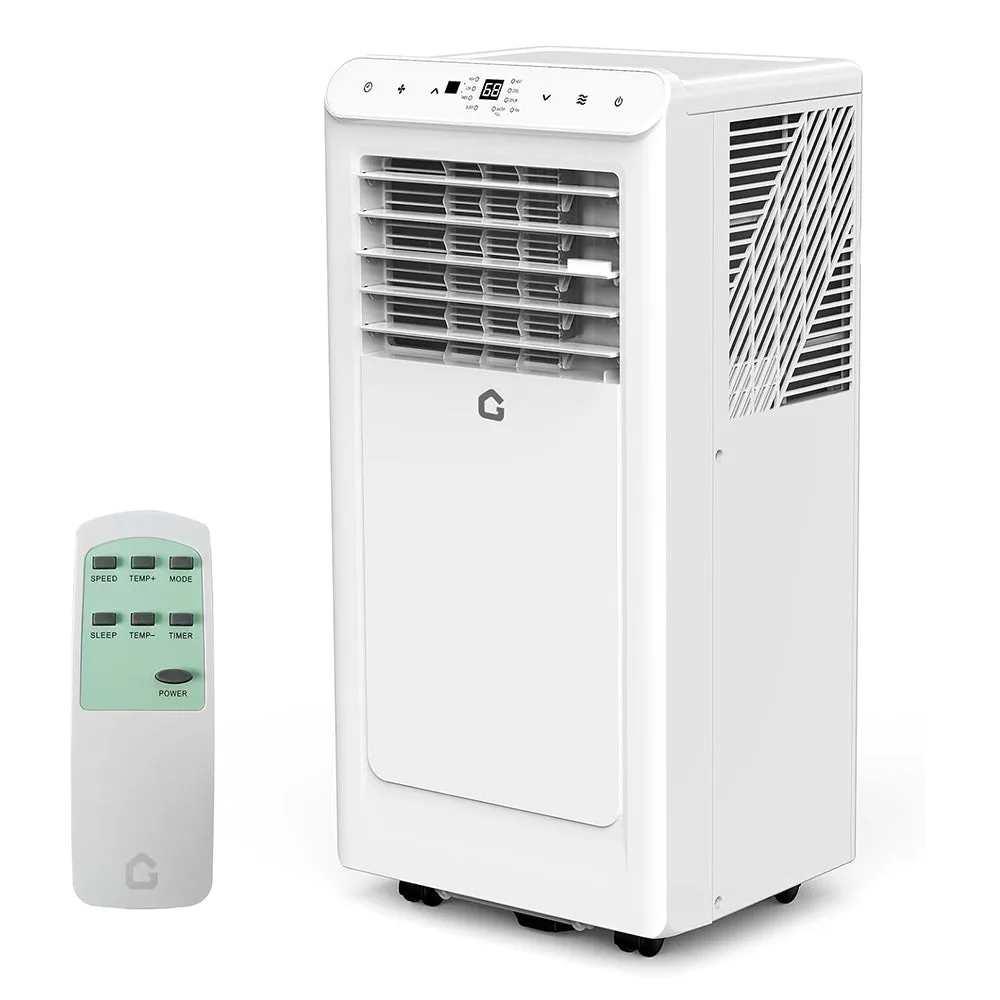
Keep the exhaust hose as short and straight as possible — every bend and extra foot of hose reduces airflow and cooling performance. Plan to clean or rinse the intake filter every 2–4 weeks depending on dust and pet dander in the room; a clogged filter is one of the most common reasons a portable AC seems to stop cooling well.
Drainage and condensation
Every air conditioner pulls moisture out of the air as it cools, and that water has to go somewhere. Many newer dual-hose portable ACs use self-evaporating technology that recycles most of that condensation back through the cooling process, so there's little or no manual draining in normal conditions. Older or single-hose models more often rely on an internal tank you empty by hand, or a drain hose you route to a bucket or floor drain — some units add a condensation pump to push water uphill to a window.
How often you'll deal with drainage depends heavily on humidity: expect daily or twice-weekly emptying in a humid climate versus much less in a dry one. Before buying, confirm whether the specific model you want is self-evaporating or needs active drain management — it changes the day-to-day maintenance noticeably.
Common mistakes and fixes
- Undersizing for the room. A unit rated below the 20-BTU-per-square-foot guideline will run nonstop and never fully cool the space — size up if the room gets direct sun.
- Long, kinked exhaust hoses. Stretching the hose across a room or bending it sharply chokes airflow — keep the unit close to the window.
- Ignoring the filter. Skipping the 2–4 week filter clean is the most common cause of a portable AC that seems to lose cooling power over time.
- Buying single-hose for a hot, sunny room. The vacuum effect single-hose units create makes them noticeably slower to recover after the door opens — dual-hose is the better call here.
- Forgetting to check drainage type. Assuming every model is self-evaporating leads to surprise puddles — verify before you buy.
Garvee Portable Air Conditioner Lineup
What We Like
- 3-in-1 versatility covers cooling, air circulation, and basement/laundry-room dehumidifying in one unit
- Quiet operation at 50–51 dB for bedroom and office use
- Remote control and 24-hour timer for hands-off scheduling
- No permanent install — good fit for renters
What to Consider
- Some models need manual condensation tank emptying rather than self-evaporating drainage
- Like all portable ACs, running costs are higher than a window unit or mini-split of the same BTU rating
Garvee's portable AC models are built around the idea that most people don't need — or can't install — a permanent cooling system for one or two rooms. The 8,000 BTU model suits a bedroom or home office, the 10,000 BTU model steps up to a living room or open studio, and the included accessories (hose, window kit, tank) mean there's nothing extra to buy before first use. For a comparison of how portable ACs stack up against other cooling methods, see our full Garvee AC lineup review.
When a portable AC isn't the right call
A portable air conditioner is the least energy-efficient way to cool a room compared to a window unit or ductless mini-split of the same BTU rating — expect to use roughly 30–50% more electricity for the same cooling output, mainly due to heat loss through the long exhaust hose and the vacuum effect on single-hose models. If you're cooling the same room every summer for months at a time, that efficiency gap adds up, and a window AC or mini-split will typically cost less to run over a season.
That trade-off is exactly why portable units are the right tool for a specific job rather than a universal one: short-term rentals, rooms where you can't install a window or wall unit, multi-room flexibility, or supplemental cooling for a space a central system doesn't reach well. If you're deciding between a portable, a window unit, and a ductless mini-split for your specific home, our portable AC vs window AC vs mini-split comparison walks through the trade-offs in more detail, and our mini-split buyer's guide covers the permanent-install option if you're cooling the same room for the full season.
What to look for before you buy
Room size and BTU rating
Match the BTU rating to your actual square footage using the 20-BTU-per-square-foot guideline above, then size up for sun exposure, high ceilings, or a room that regularly holds more than two people. Undersizing is the most common regret buyers report — when in doubt, round up to the next BTU tier rather than down.
Hose configuration
Choose dual-hose if the room runs hot, gets direct sun, or you want the fastest possible recovery time; single-hose is fine for milder climates or occasional, budget-conscious use. Either way, plan your window setup before you buy so you know the hose will reach without excessive bending.
Drainage type
Check whether the model is self-evaporating or requires manual tank emptying or a drain hose, especially if you live somewhere humid — this affects how much maintenance you'll actually do week to week.
Noise and extra modes
If the unit is going in a bedroom or office, check the decibel rating — Garvee's models run around 50–51 dB, comparable to quiet office background noise. A dehumidify mode is a genuine bonus if the room (or a nearby basement or laundry area) tends to run humid outside of cooling season.
How We Chose
We compared Garvee's published portable AC specifications against independent HVAC sizing standards, hose-configuration research, and installation and efficiency data from home-appliance resources to verify the claims in this guide.
Final verdict
A portable air conditioner is the right choice if you need flexible, no-install cooling for a bedroom, office, or rental — pick a dual-hose model sized with the 20-BTU-per-square-foot rule for the fastest, steadiest results. Skip it if you're cooling the same room continuously all summer and can install a window unit or mini-split instead, since both cost meaningfully less to run. For most renters and single-room cooling needs, Garvee's 3-in-1 portable AC lineup covers cooling, fan, and dehumidify modes in one unit that installs in under 30 minutes.
Shop Garvee Portable ACs- Pick HVAC — Air Conditioner Room Size Calculator
- Essential Home and Garden — Dual vs Single-Hose Portable AC
- Ducting.com — Portable Air Conditioner Drainage Guide
- Bob's Repair — AC Installation Guide
- Evapolar — Most Energy-Efficient Portable Air Conditioners 2026
- Garvee — 8,000 BTU Portable Air Conditioner Product Page
This guide is for general home-cooling reference only and is not a substitute for the manufacturer's installation and safety instructions. Always follow the included manual for electrical, ventilation, and drainage setup, and consult a licensed electrician or HVAC technician for questions about circuit capacity or permanent installations. Homarosa may earn a commission from qualifying purchases made through links on this page.
Recommended for you
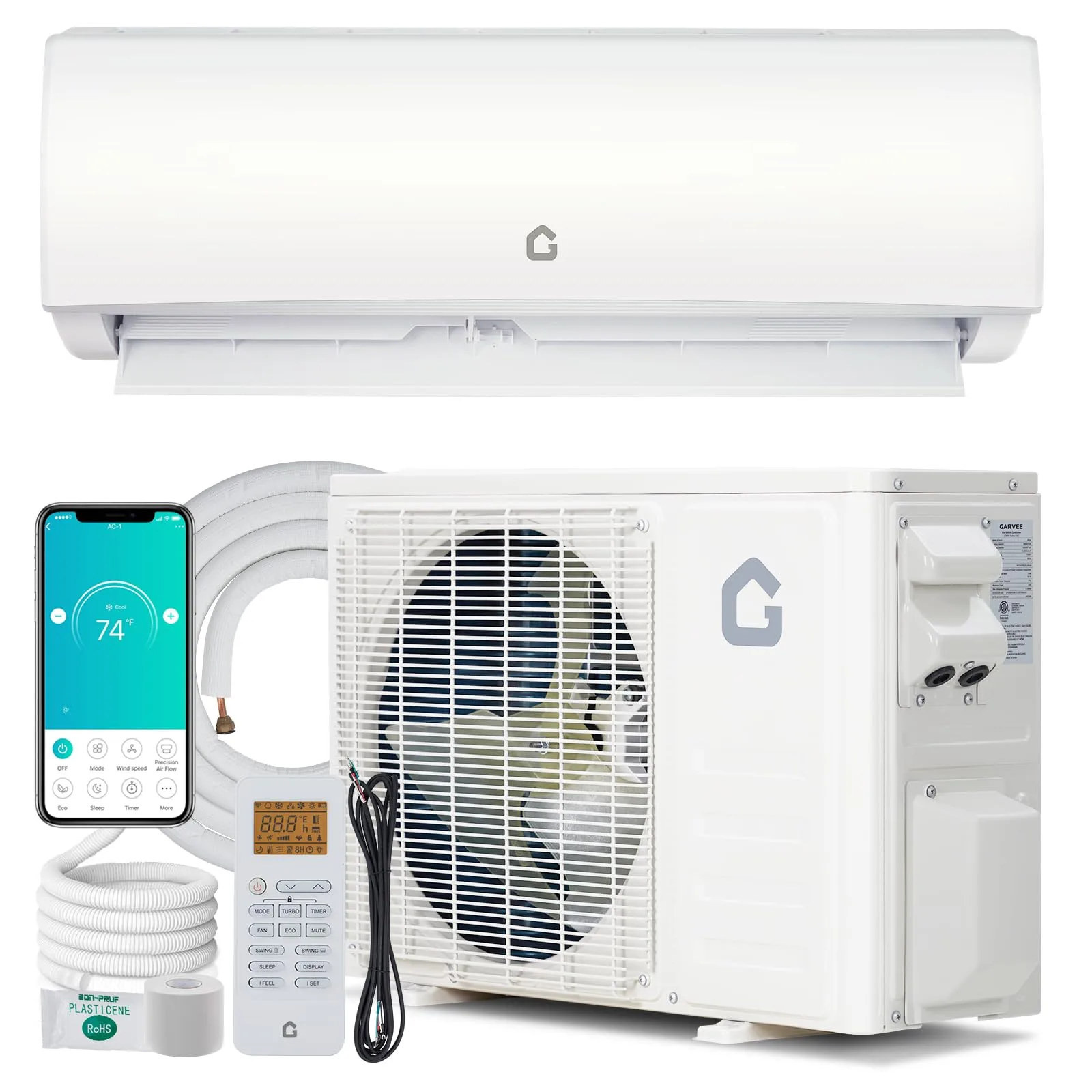 How to Install a Mini Split Air Conditioner: 7-Step DIY Guide (2026)
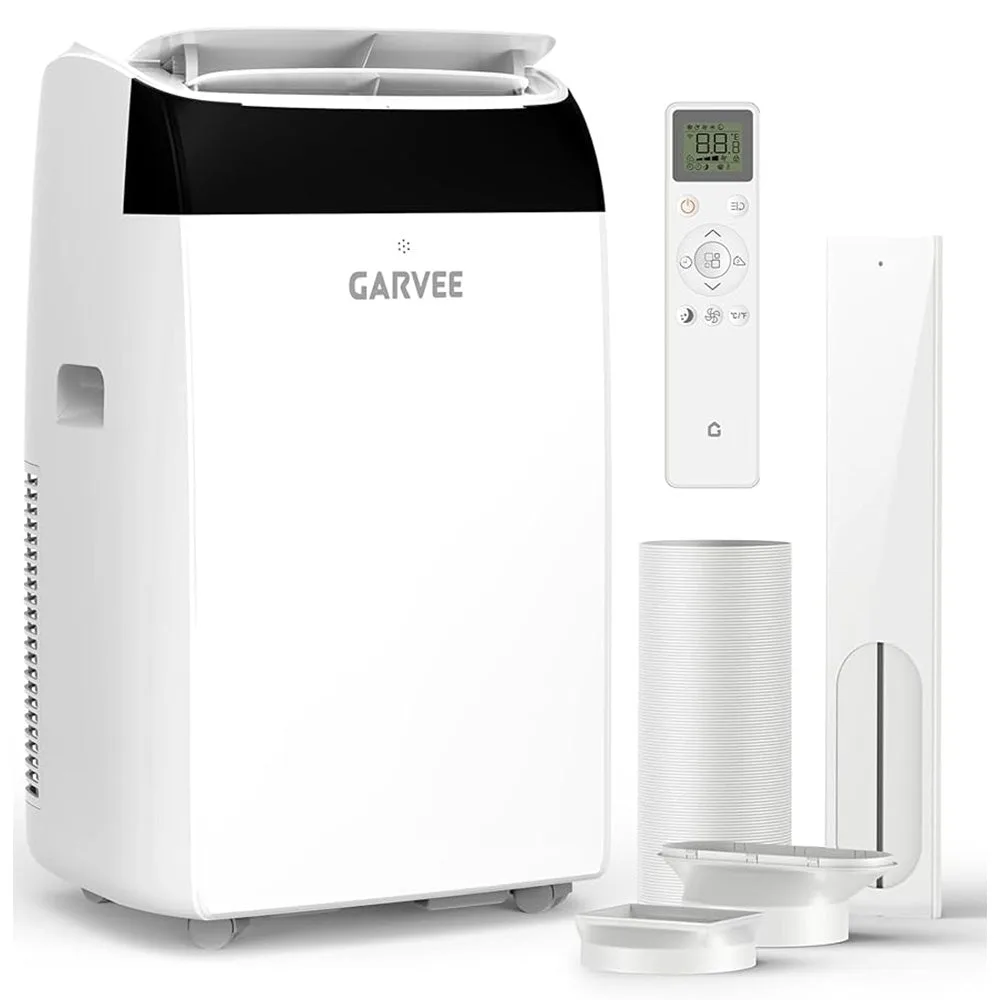 Garvee AC Review 2026: Best Portable & Mini-Split Cooling
 Farmers Defense: Complete UPF 50+ Sun Safety Guide (2026)
 Custom LED Neon Signs: Planet Neon's Top UK Brand (2026)
 Farmers Defense Review: ProMesh Sleeves Tested for Garden and Farm Work
 How to Make Orchid Arrangements Last Longer: 7 Expert Tips