Garvee AC Review 2026: Inverter Cooling for Home & Garage
Garvee's AC lineup covers portable units, ductless mini-splits, and evaporative coolers — not window AC. This review breaks down inverter efficiency, coverage, noise, and who each format actually suits before you buy.
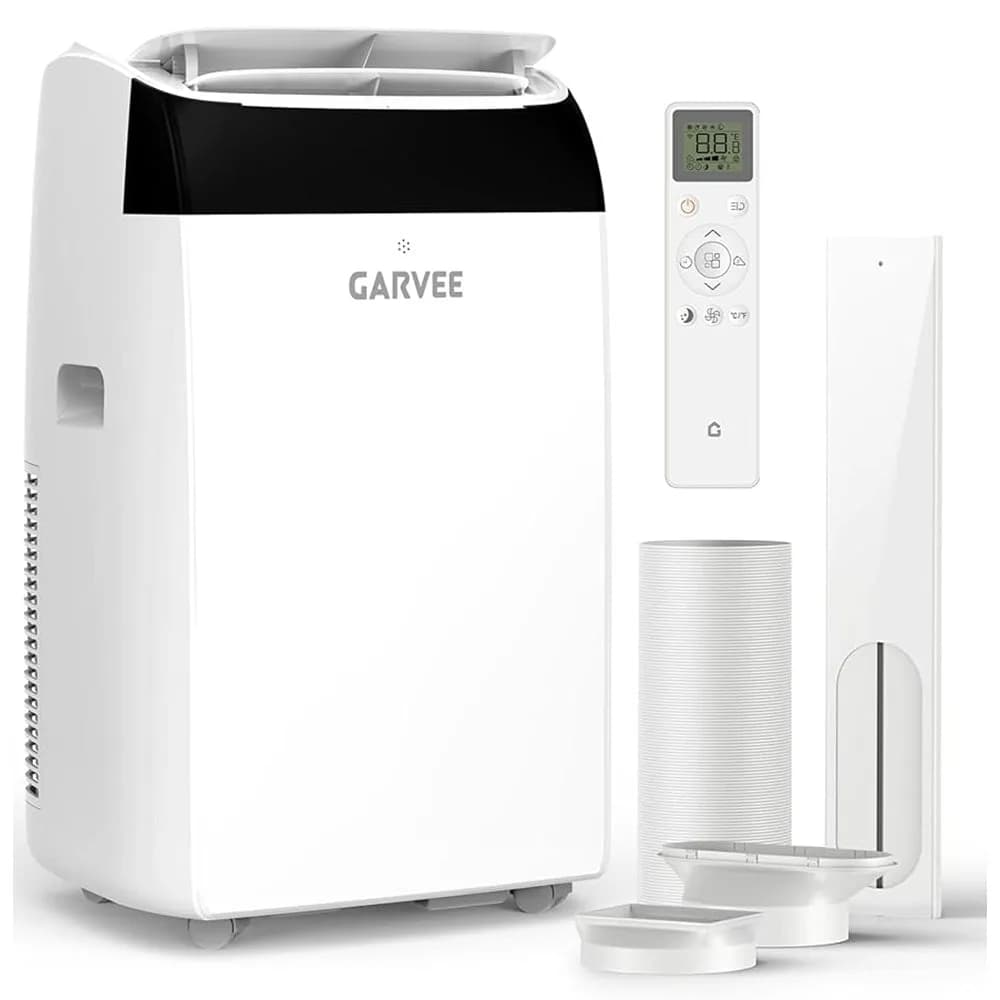
Garvee AC Review 2026: Meet the Cooling Lineup
- Garvee AC Review 2026: Meet the Cooling Lineup
- Garvee Portable Air Conditioners
- Garvee Ductless Mini-Split Systems
- Garvee Evaporative Coolers
- Portable vs Mini-Split vs Evaporative: Side-by-Side
- Inverter Technology and Energy Efficiency
- Common Mistakes When Choosing a Garvee AC
- How to Choose the Right Garvee Cooling System
This Garvee AC review breaks down three of the brand's cooling lines — portable air conditioners, ductless mini-splits, and evaporative coolers — so you know which inverter-driven Garvee unit fits your home, garage, or apartment before you check the lineup.
Key Highlights
- Garvee's cooling range spans three formats: portable units, ductless mini-splits, and evaporative coolers; Garvee also sells window ACs, covered separately.
- Portable models run 8,000–10,000 BTU and cover 350–450 sq ft with 3-in-1 cooling, fan, and dehumidification modes.
- Mini-splits scale from 12,000–23,000 BTU, covering 750–1,500 sq ft, with inverter compressors and SEER ratings of 18 or higher.
- Mini-splits are the most efficient of the three, achieving SEER 20–35+ versus CEER 9–15 for portable units.
- Evaporative coolers add a lower-cost, ductless option for dry climates and semi-open spaces like garages and patios.
Garvee is a solid pick if you want inverter-driven cooling without paying for central AC — pick the format that matches your installation situation.
Garvee doesn't manufacture a single "best" AC — the brand's value is in offering multiple distinct formats so you can match cooling method to your space and budget, rather than settling for a one-size-fits-all unit.
Shop Garvee Air ConditionersGarvee AC Review 2026: Meet the Cooling Lineup
Garvee builds its air conditioner catalog around three installation types rather than one flagship product. According to the brand's own catalog, the range covers portable units (8,000–10,000 BTU), ductless mini-split systems (12,000–23,000 BTU), and evaporative coolers, positioned as inverter-equipped, energy-conscious cooling for renters and homeowners alike. Garvee doesn't manufacture the hardware itself — like most online-first climate control retailers, it sources from established ODM suppliers and rebrands under the Garvee label, then backs the range with installation kits, remote controls, and (on WiFi models) smartphone app support.
That structure means the real "review" question isn't whether Garvee makes a good AC — it's which Garvee format actually matches your space. A renter in a 400 sq ft studio and a homeowner cooling a detached garage need completely different units, even if both search for the same brand.
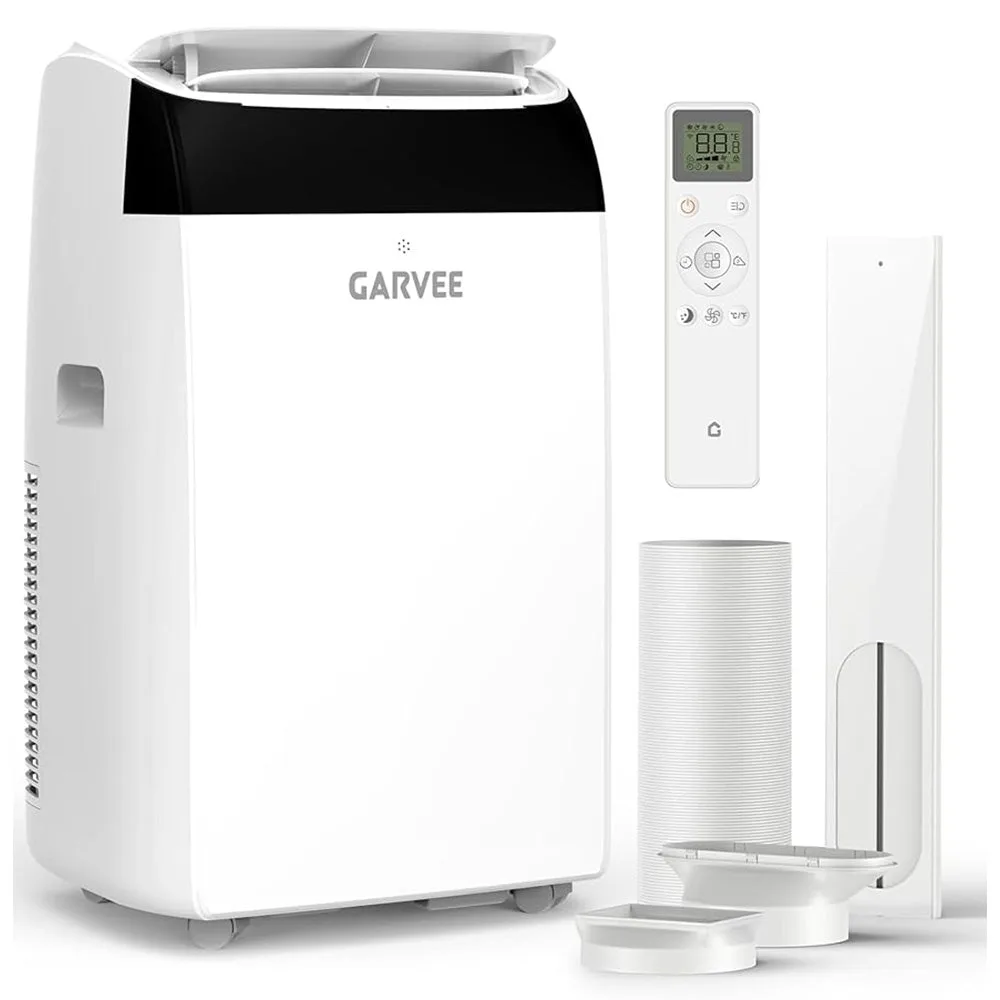
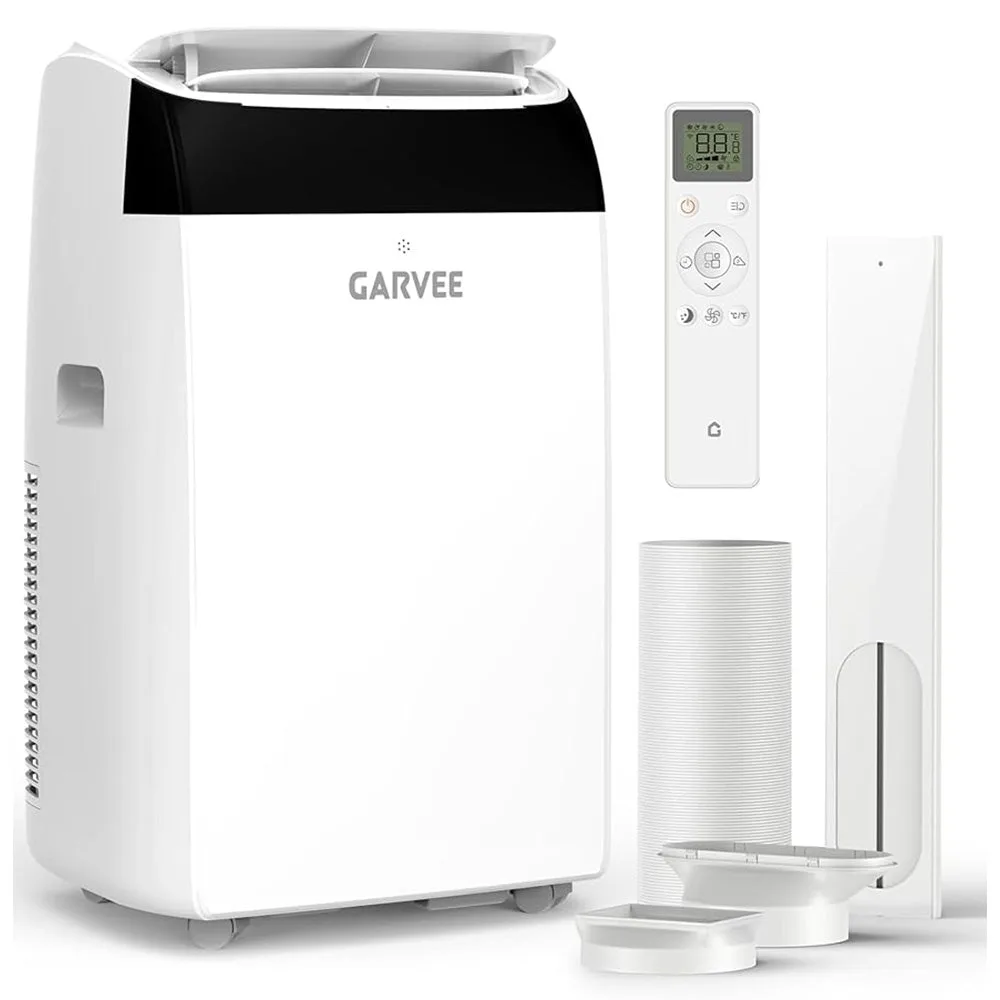
Garvee Portable Air Conditioner
3-in-1 cooling, fan, and dehumidification with a 24-hour programmable timer — no window bracket left behind when you move.
Check Current PriceGarvee Portable Air Conditioners
Garvee's portable line runs two capacities: an 8,000 BTU model rated for spaces up to 350 sq ft and a 10,000 BTU model rated up to 450 sq ft. Both operate in three modes — cooling, fan-only circulation, and dehumidification rated at 50 pints per day — which makes them useful beyond pure temperature control, especially in humid basements or laundry rooms. Noise output sits around 50–51 dB, comparable to a quiet window AC, and both models ship with a remote, exhaust hose, window kit, and condensation tank.
The trade-off is efficiency. Portable ACs typically post CEER ratings toward the low end of the scale (as low as 9–11), meaning they consume roughly 30–50% more electricity than a window unit of equivalent capacity, and 50–70% more than a mini-split. That's the cost of not drilling into a wall or window frame — you're paying for flexibility, not efficiency. For more detail on the pros and cons of portable versus other cooling methods, see our portable AC buyer's guide.
Garvee Portable Air Conditioner (8,000–10,000 BTU)
What We Like
- Zero permanent installation — sets up and packs away in minutes
- 3-in-1 function covers cooling, circulation, and moisture control
- Reusable filter keeps ongoing maintenance simple
What to Consider
- Lower efficiency than window or mini-split units of the same capacity
- Condensation tank needs periodic emptying unless self-evaporating
- Exhaust hose takes up floor space near the window
For a studio apartment, home office, or a room you're only cooling seasonally, the portable line is the least-commitment way to try Garvee. It's not the most efficient option in the catalog, but it's the only one you can unplug and take with you.
Garvee Ductless Mini-Split Systems
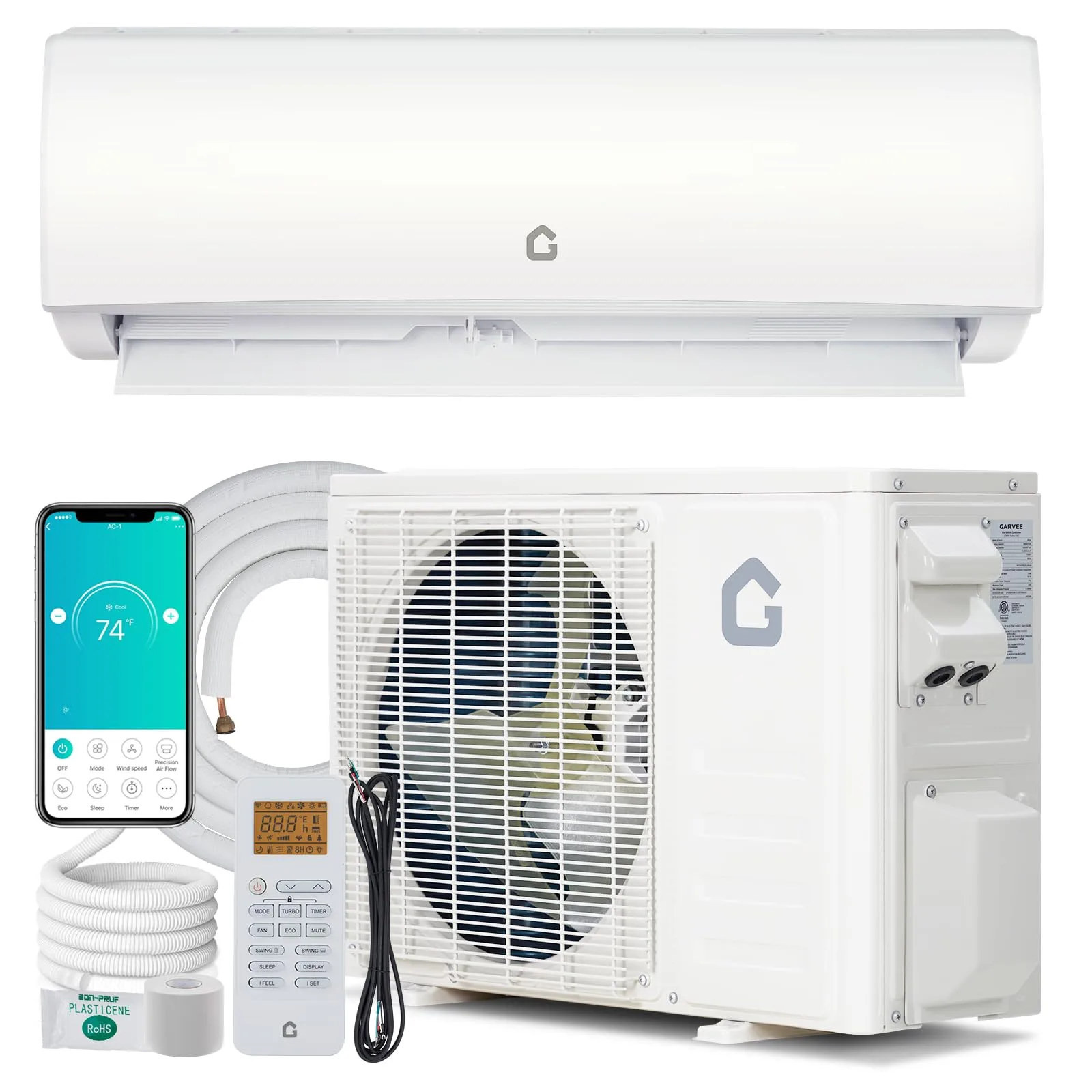
The mini-split line is where Garvee's inverter technology story is strongest. Models range from 12,000 BTU (covering up to 750 sq ft) to 23,000 BTU (covering up to 1,500 sq ft), all built on 230V inverter compressors with SEER ratings of 18 or higher and R32 eco-refrigerant. Because mini-splits provide both cooling and heat-pump heating from the same outdoor condenser, they can replace two appliances (an AC and a space heater) with one system.
Noise is a standout: the 12,000 BTU model runs at roughly 28 dB, among the quietest room-cooling options available, while larger models range up to about 41 dB. Every mini-split ships with a full installation kit — refrigerant lines, wiring, mounting hardware — but Garvee recommends professional installation for the outdoor condenser and refrigerant charging, unlike the plug-and-play portable line. If you're planning a DIY-plus-pro approach, our guide on how to install a mini-split walks through the steps and which parts genuinely need a licensed technician.
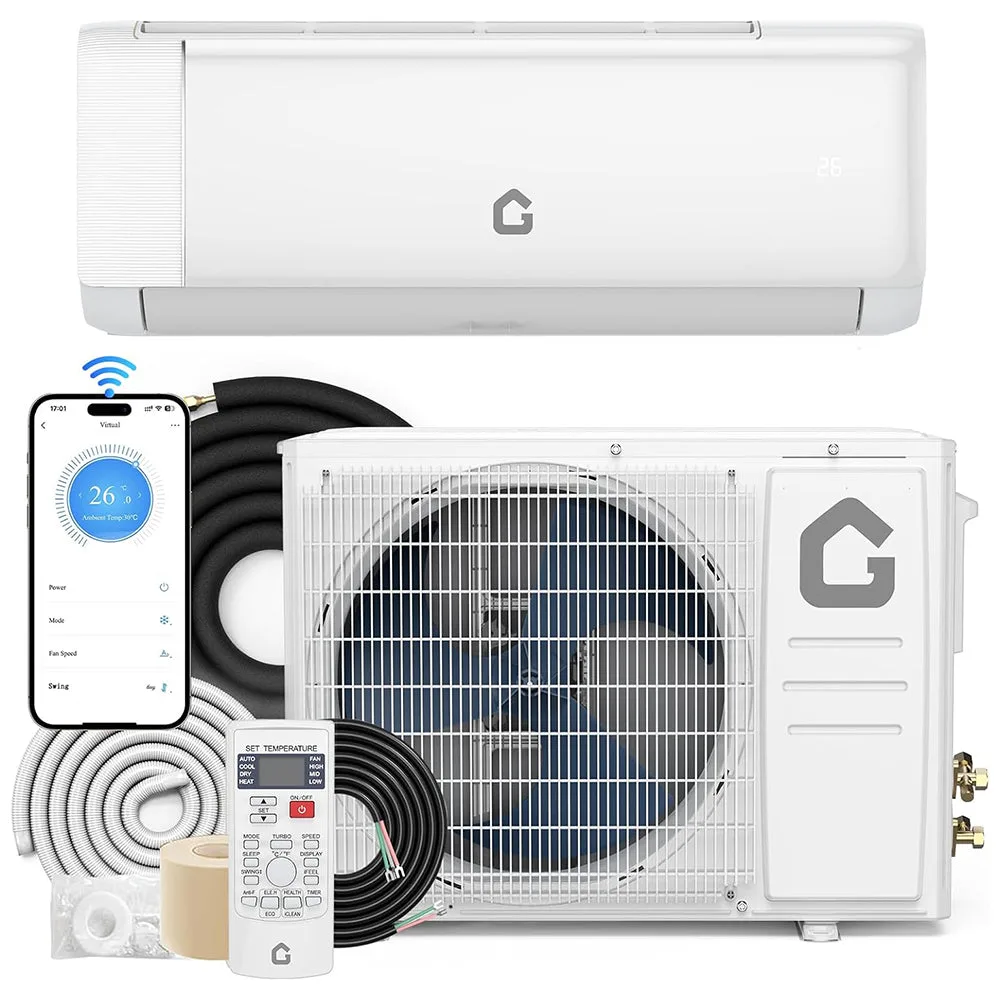
Garvee Mini-Split System (12,000–23,000 BTU)
What We Like
- Highest efficiency in the Garvee catalog, with real long-term savings potential
- Ultra-quiet indoor unit, especially the 12,000 BTU model
- Zone control means you only condition the room you're using
What to Consider
- Requires professional installation for the outdoor condenser and refrigerant lines
- Higher upfront investment than portable or evaporative options
- Not a fit for renters who can't modify exterior walls
If you own your home, have a room without ductwork, or are tired of a portable unit's electricity draw, the mini-split line is the version of Garvee worth the extra install effort.
Garvee Evaporative Coolers
The evaporative line rounds out Garvee's catalog with a different cooling mechanism entirely: instead of a refrigerant cycle, evaporative coolers pull warm air through water-saturated pads, cooling it through evaporation before circulating it into the room. There's no compressor, no refrigerant, and no window bracket — just a water reservoir and a fan.
This makes evaporative units a genuinely different tool, not a smaller AC. They work best in low-humidity climates (arid or semi-arid regions), and in semi-open spaces like garages, workshops, covered patios, or sheds where a sealed room isn't practical. In humid climates they lose effectiveness fast, since the air is already near saturation and can't absorb much additional moisture.
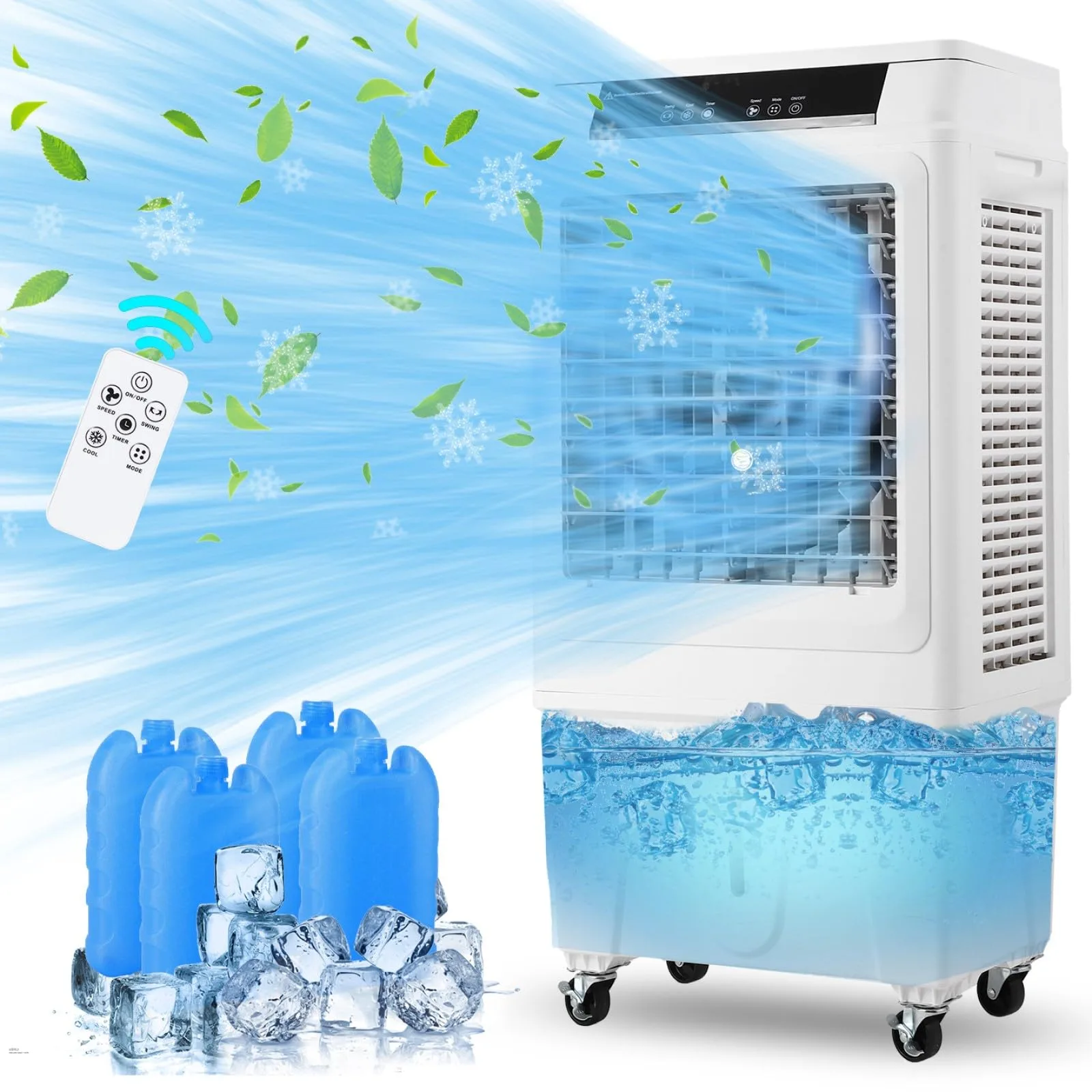
Garvee Evaporative Cooler
What We Like
- No compressor or refrigerant, generally lower running cost than portable AC
- Adds humidity, which can be a plus in very dry climates
- Works in open or ventilated spaces where sealed-room AC doesn't
What to Consider
- Not effective in humid climates
- Needs a water reservoir refilled regularly
- Cools less aggressively than a true refrigerant-based AC
Treat this as a specialty pick: right for a dry-climate garage or covered patio, wrong for a humid bedroom that needs a hard temperature drop.
Portable vs Mini-Split vs Evaporative: Side-by-Side
Here's how the three Garvee cooling formats stack up on the factors that actually decide fit: installation effort, efficiency, and climate suitability.
| Factor | Portable AC | Mini-Split | Evaporative Cooler |
|---|---|---|---|
| Best for | Renters, single rooms | Homeowners, whole-zone efficiency | Dry climates, garages/patios |
| Typical coverage | Up to 350–450 sq ft | Up to 750–1,500 sq ft | Varies by space, open-air use |
| Installation | Self-install, window kit | Professional recommended | Self-install, no sealing needed |
| Efficiency | Lowest (CEER 9–15) | Highest (SEER 18–35+) | Low running cost, no compressor |
| Noise | ~50–51 dB | ~28–41 dB | Fan-driven, varies by setting |
| Climate fit | Any climate | Any climate | Low-humidity climates only |
Inverter Technology and Energy Efficiency
Inverter compressors are the throughline across Garvee's higher-end units: instead of cycling fully on and off, an inverter compressor modulates speed to match the room's actual cooling demand, which cuts wasted energy and reduces temperature swings. That's the core reason mini-splits post SEER ratings of 20–35+, dramatically higher than the CEER 9–15 range typical of window and portable ACs. The efficiency gap comes from three factors: inverter-variable-speed compressors, zero ductwork losses (standard ducted central air can lose 20–30% of cooled air to leaks and insulation gaps), and per-room zone control that avoids conditioning empty spaces.
ENERGY STAR certification is a useful independent checkpoint here. The program requires a CEER of at least 9.0 for portable ACs, and either a SEER above 14 or SEER2 above 13.4 for mini-splits and window units — certified models use roughly 15–20% less electricity than non-certified equivalents. Garvee highlights ENERGY STAR certification on several of its window and mini-split models as a selling point, though certified units typically cost 10–15% more upfront, recouped within about 2–3 years through lower electricity bills.
Common Mistakes When Choosing a Garvee AC
Most buyer's remorse with any AC brand traces back to a handful of predictable mistakes, not the hardware itself.
- Undersizing for the space. An 8,000 BTU portable unit in a 500 sq ft room will run constantly and still underperform — check the rated coverage before buying, not just the BTU number.
- Choosing portable for a permanent installation. If you own the home and plan to cool the same room for years, a mini-split's efficiency advantage compounds over time; a portable unit is the wrong long-term tool.
- Buying evaporative for a humid climate. Evaporative cooling loses effectiveness as humidity rises — it's a dry-climate specialty tool, not a general-purpose AC replacement.
- Skipping professional installation on a mini-split. Refrigerant charging and outdoor condenser placement affect both performance and warranty; DIY mini-split installs are a common source of underperformance complaints.
- Ignoring noise ratings for bedrooms. A portable unit's ~50 dB hum is noticeable overnight; if quiet matters, the mini-split's ~28 dB rating is the better fit.
How to Choose the Right Garvee Cooling System
Work through these questions in order, and the right Garvee format usually becomes obvious:
1. Do you own or rent the space?
Renters or anyone who might relocate within a year or two should default to the portable line — no wall modifications, no lost security deposit. Homeowners planning to stay put get more long-term value from a mini-split's efficiency.
2. How large is the space, and does it have ductwork?
Match square footage to the rated coverage for each format — 350–450 sq ft for portable models, 750–1,500 sq ft for mini-splits. If the room lacks central ductwork entirely, a mini-split effectively replaces both an AC and a heater.
3. What's your local humidity like?
In arid or semi-arid regions, an evaporative cooler can handle garages, workshops, and covered patios at a lower running cost than a compressor-based unit. In humid regions, skip evaporative entirely and choose portable or mini-split.
How We Chose
This review is built from Garvee's own product and collection pages, cross-checked against independent efficiency data from ENERGY STAR and EnergySage, and organized around real-world use-case fit rather than a single "best overall" pick.
The Verdict on Garvee AC
There's no single "best" Garvee air conditioner — the brand's real strength is covering three distinct cooling methods well enough that most buyers can find a legitimate fit. Choose the portable line if you rent or need to move the unit between rooms; choose the mini-split line if you own your home and want the best long-term efficiency and quiet operation; choose evaporative only if you're in a dry climate cooling a garage, workshop, or covered patio. Skip evaporative if you live somewhere humid, and skip portable if you're cooling the same permanent room for years — the mini-split's efficiency will pay you back.
Shop Garvee Air ConditionersNew to ductless systems? Start with our 2026 mini split AC buyer's guide.
This article is an independent buying guide and contains affiliate links. Homarosa may earn a commission if you purchase through these links, at no extra cost to you. Product specifications and coverage ratings are sourced from Garvee's official product pages and are subject to change — verify current specs and availability directly with the vendor before purchasing.
Recommended for you
 Portable Air Conditioner Guide 2026: Best Sizing & Setup Tips
 How to Install a Mini Split Air Conditioner: 7-Step DIY Guide (2026)
 Farmers Defense: Complete UPF 50+ Sun Safety Guide (2026)
 Custom LED Neon Signs: Planet Neon's Top UK Brand (2026)
 Farmers Defense Review: ProMesh Sleeves Tested for Garden and Farm Work
 How to Make Orchid Arrangements Last Longer: 7 Expert Tips