Spray tan at home has come a long way. The streaky orange tans of the early 2000s are gone - replaced by professional-grade formulas that deliver a natural, even bronze with the right technique. The catch: technique matters a lot. Skip prep, apply unevenly, or use the wrong formula, and you’ll end up with exactly the patchy result everyone worries about.
This guide covers everything you need to know before, during, and after your first at-home spray tan - from choosing the right formula to fixing mistakes before they set.
What Is a Spray Tan at Home (and How It Differs from Salon)?
Salon spray tans use an airbrush gun and professional-grade solution applied by a technician in a controlled booth. At-home spray tans use either a self-application mousse, lotion, mist, or drops that you apply yourself.
The quality gap has closed significantly. Modern at-home formulas use the same active ingredient as salon solutions - DHA (dihydroxyacetone), a naturally derived compound that reacts with amino acids in the skin’s outer layer to produce a temporary brown pigment. The difference is in formulation quality, DHA concentration, and application method.
What you get with a high-quality at-home formula:
– DHA concentrations close to professional solutions (typically 8-12%)
– Guide colors so you can see where you’ve applied
– Fast development times (express formulas develop in 1-4 hours)
– Organic, paraben-free formulations that won’t irritate sensitive skin
Why Prep Is the Most Important Step
Most at-home spray tan failures happen before a single drop of product is applied. Skin that isn’t properly prepped absorbs DHA unevenly, producing streaks and patchy areas that no technique can fix.
24 hours before:
– Shave or wax (hair removal after a tan can strip it unevenly)
– Exfoliate thoroughly - especially elbows, knees, ankles, and feet where skin is drier and thicker
– Skip heavy moisturizers, perfumes, and deodorants
Day of (1-2 hours before):
– Shower with a mild, sulfate-free cleanser
– Apply a light, water-based moisturizer to extra-dry areas only (knuckles, heels, elbows) - don’t moisturize the areas you’re tanning normally
– Ensure skin is completely dry before application - moisture blocks DHA absorption
The exfoliation step matters most. Dead skin cells absorb DHA faster than fresh skin, which causes the tan to appear darker and fade unevenly. A deep exfoliating mitt (like the Deep Exfoliating Mitt from Sunna Pro) removes the layer of dead skin that causes patchiness, giving you a fresh, even base.
Choosing the Right Spray Tan Formula for Home Use
Not all at-home formulas suit every skin tone or lifestyle. Here’s how to choose:
Mousse (Best for Beginners)
Express tanning mousse is the most beginner-friendly format. The foamy texture makes it easy to see coverage, it dries quickly, and most formulas include a guide bronzer (immediate color you can see during application) with the developing DHA underneath.
Best for: Fair to medium skin, first-time self-tanners, anyone who wants fast results. Development time is typically 1-4 hours before you rinse.
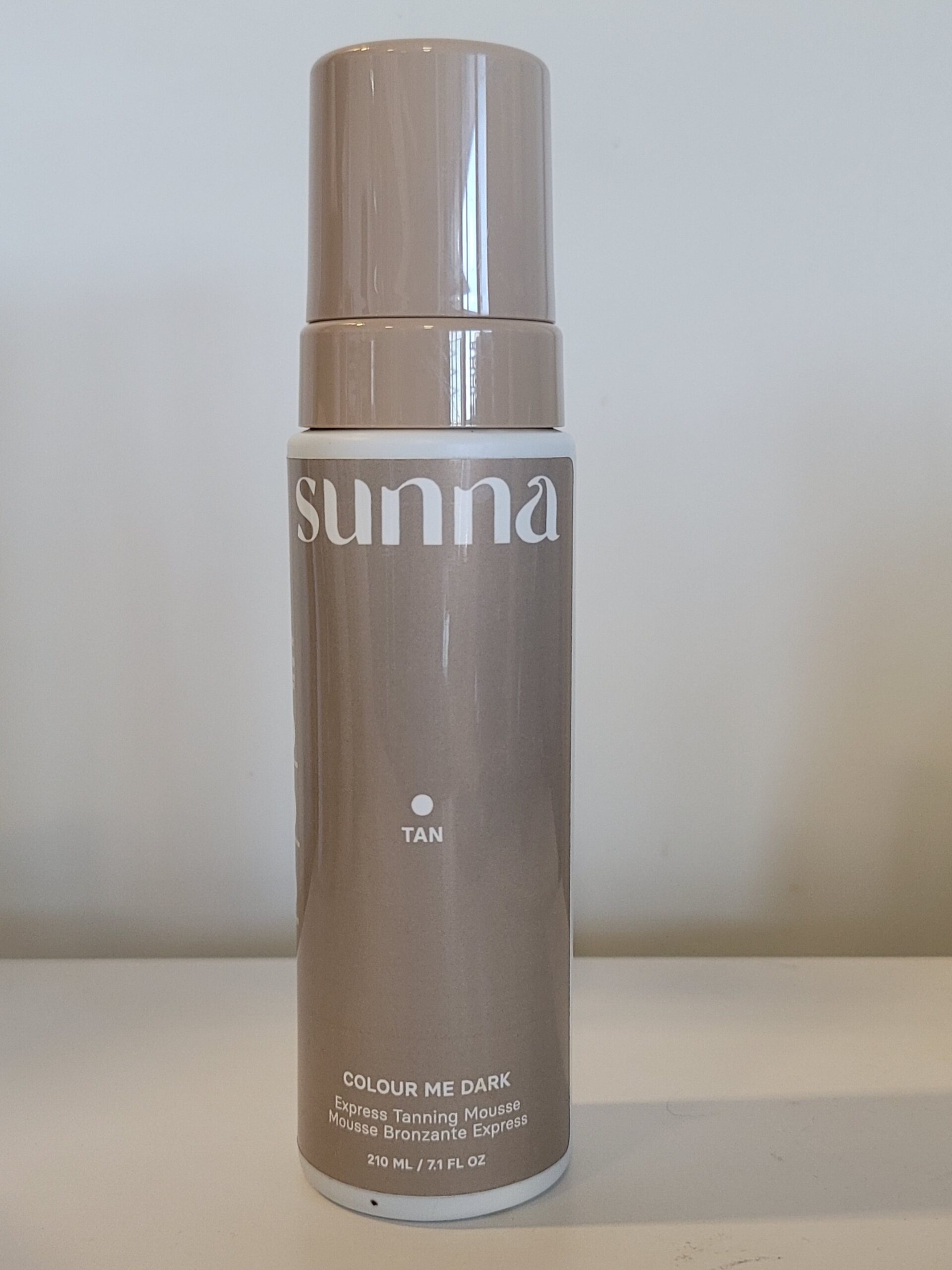
Sunna Pro’s Colour Me Dark Express Tanning Mousse ($25) uses a natural caramel guide color with a dark DHA formula - good for medium to olive skin tones who want a deep tan. Their newer Olive Collection Mousse ($25) is specifically formulated for olive and deeper skin tones with a green-undertone base that prevents the orange cast.
Gradual Tan (Best for Maintenance)
Gradual tanning lotions build color over several applications. They look like regular body lotion but contain a low-concentration DHA that gradually deepens the tan with each use.
Best for: Maintaining an existing tan, building a subtle glow over time, anyone who wants the most natural-looking result with minimal risk.
The Gradual Tan 236ml ($16) from Sunna Pro is a practical daily-driver that lets you control depth by adjusting how often you apply.
Face Tan Water
The face requires a lighter touch - lower DHA concentration, no guide bronzer (which can look unnatural on the face), and a formula that won’t clog pores or cause breakouts.
The Face Tan Water ($19.50) applies like a toner and develops naturally over 4-6 hours. A few drops on a cotton pad, pressed gently across the face, gives a sun-kissed effect that looks completely natural.
Drops (Most Customizable)
Bronzer drops mix into your existing moisturizer, giving you complete control over depth. Use 2-3 drops for a light glow, 6-8 for a darker result.
The Bronzer Drop Bundle (30% savings) includes all three Sunna Pro drop shades, letting you mix warm, neutral, or cool-toned bronze depending on your skin. This is the format used by makeup artists and experienced self-tanners because the result looks closest to actual sun exposure.
The Best Products for Spray Tan at Home
Before application, check that you have everything you need:
- Tanning formula (mousse, drops, or gradual tan - matched to your skin tone and desired depth)
- Tanning mitt (non-negotiable for streak-free results - bare hands cause blotchy application)
- Exfoliating mitt (for the day before)
- Loose dark clothing to wear while the tan develops
- Barrier cream for nails, cuticles, and hairline (prevents over-absorption in these areas)
The Luxury Self-Tanning Mitt ($6) from Sunna Pro is worth having - it distributes mousse evenly without absorbing product, and the seamless design eliminates the lines that cheaper mitts can create.
Application Technique: Step by Step
1. Start at the ankles, work upward. Work section by section - lower legs, upper legs, torso, arms - using circular motions followed by long, blending strokes. Going upward prevents you from leaning over areas you’ve already tanned and creating lines.
2. Use less product than you think you need. A mousse about the size of a golf ball covers both legs. Overloading the mitt causes streaks.
3. Blend joints carefully. Elbows, knees, and ankles absorb more DHA and tend to go darker. Use a tiny amount of barrier cream on these areas, or apply product dry (without the mitt) for lighter coverage.
4. Do your face last with a separate, smaller amount of product and blend upward into the hairline.
5. Dry thoroughly before dressing. Wait at least 10 minutes after application. Wear loose, dark clothing and avoid sweating for the first few hours.
How Long Does a Spray Tan at Home Last?
A properly applied self-tan typically lasts 7-10 days before it starts to fade. Express formulas (1-4 hour development) tend to fade faster than 12-hour development solutions. How long your tan lasts depends largely on how you care for it afterward.
To extend the life of your tan:
– Moisturize daily with a non-oil-based lotion (oil breaks down DHA faster)
– Pat dry after showering instead of rubbing
– Avoid long soaks in pools, baths, or hot tubs
– Skip exfoliating treatments until you’re ready to remove the tan
When to Rinse
Development time varies by formula. Express mousse: 1-4 hours (darker tan = longer wait, up to the stated maximum). A 12-hour formula like Sunna Pro’s 12 Hour Natural Tanning Solution develops overnight - apply before bed, rinse in the morning.
After rinsing, the guide bronzer washes away, leaving the developed DHA tan underneath. The tan continues to slightly deepen for another 24-48 hours after rinsing, so don’t panic if it looks lighter immediately after the shower.
Common Spray Tan at Home Mistakes (and How to Fix Them)
Streaky legs: Usually from application direction. Go over the area with a dry mitt (no product) using blending strokes before the tan sets.
Dark knees and elbows: Apply a small amount of regular moisturizer to these areas before tanning, or dilute your product by applying it with a dry mitt.
White underarms: Deodorant residue blocks DHA. Always shower and exfoliate underarms before application.
Fading in patches: Usually from uneven skin texture during application. The fix is better exfoliation next time. To remove an uneven fade, exfoliate the whole area and apply fresh product.
FAQ: Spray Tan at Home
Can I spray tan at home every week?
Yes, but let each tan fully develop and then fade before applying a fresh one. Applying over an uneven fade will look patchy. Exfoliate before each new application.
Does spray tan at home look orange?
Quality DHA formulations with the right undertone for your skin tone look natural. Orange tans usually result from formulas with warm-biased DHA, low product quality, or over-application. Sunna Pro’s organic formulas use a neutral to cool-toned DHA base.
Is spray tan safe for sensitive skin?
Look for paraben-free, fragrance-free, vegan formulas. Sunna Pro’s line is organic, paraben-free, and made in Canada - suitable for most sensitive skin types.
For a detailed breakdown of Sunna Pro’s specific product line and whether it’s worth the price, see the Sunna Pro review. For step-by-step application technique once you have your formula, see the complete how to apply self-tanner at home guide.