The Buttress Pillow Review: The Genius Sleep Upgrade That Actually Works
I did not think The Buttress Pillow could make me feel this… organized. Like, I expected the usual. A few nights of “maybe it’s better?” and then it slowly becomes another expensive lump living on the bed. That is how most “sleep upgrades” go. They promise spinal alignment and luxury comfort and then you wake […]
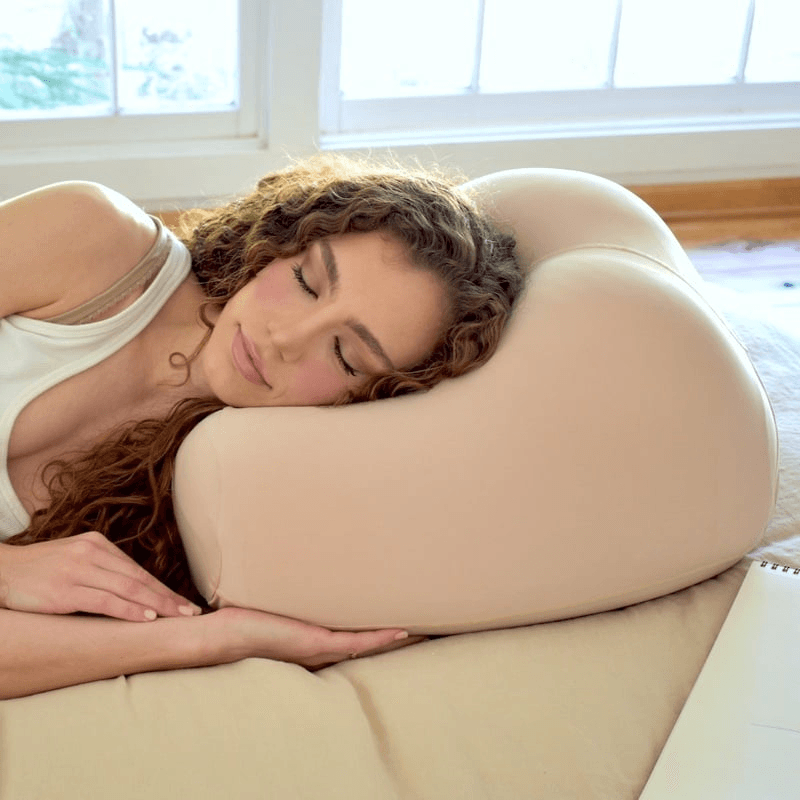
I did not think The Buttress Pillow could make me feel this… organized.
Like, I expected the usual. A few nights of “maybe it’s better?” and then it slowly becomes another expensive lump living on the bed. That is how most “sleep upgrades” go. They promise spinal alignment and luxury comfort and then you wake up with your shoulder in a weird place and your neck basically filing a complaint.
But the Buttress Pillow is different in a way that’s almost annoying, because once you feel what it’s doing, you can’t unfeel it.
It’s not a regular pillow. It’s not even trying to be. It’s more like… a support system that happens to be soft.
This is my full Buttress Pillow review. What it is, how it works, who it’s for, who should skip it, and what I noticed after actually sleeping with it (not just hugging it for 30 seconds and declaring “life changing”).
What the Buttress Pillow actually is (in normal human language)
The simplest way to explain it: it’s a shaped pillow designed to brace parts of your body while you sleep.
Most people use it for side sleeping. Some use it for back sleeping. A lot of people use it to stop themselves from twisting into that half stomach, half side position that feels good at 2:00 a.m. and feels terrible at 7:00 a.m.
The “buttress” idea is basically architectural. A buttress supports a wall so it doesn’t collapse or shift. Same concept here, but for your hips, knees, lower back, and shoulders.
So instead of relying on willpower to “sleep correctly” (lol), you place the pillow in a way that makes the good position the easy position.
And that matters more than people admit.
Why I even tried it
I’m a side sleeper who rotates like a rotisserie chicken.
Some nights I’m curled up. Some nights I’m stretched out. Some nights I wake up with my top leg hanging forward like it’s trying to escape. And that last one is what usually triggers the chain reaction:
Hip rotates forward. Lower back twists. Shoulder collapses. Neck compensates. Morning arrives with a dull ache that’s not dramatic enough to see a doctor, but annoying enough to make you think, “Is this just… my life now?”
I’ve tried the classic knee pillow. It helps, but it’s not stable. It moves. It falls out. You wake up and it’s on the floor like a little defeated marshmallow.
The Buttress Pillow looked like it solved that specific problem: support that stays put.
So I went for it.
First impressions out of the box

Two quick notes.
First, it has structure. You can tell immediately this isn’t a floppy decorative pillow pretending to be ergonomic. It holds its shape. Not in a stiff way, just… intentional.
Second, the shape is the whole point. You’re not meant to stack it like a standard bed pillow. It’s designed to wedge, brace, and fill gaps.
If you’re the kind of person who buys things and then throws the instructions away, you might want to not do that here. At least not on night one. The pillow is simple, but the “where do I put this” part matters.
Once you place it right, though, it clicks fast.
How you’re supposed to use it (and how I ended up using it)
Most people will use it in one of these ways:
1. Side sleeping with leg and hip support
This is the main use case. You position it so your top leg rests on it and your hips don’t collapse forward. The goal is to keep your pelvis more neutral, instead of rotating and twisting your lower back.
This was immediately noticeable for me. Not in a “wow fireworks” way. More like my body stopped searching for a stable position.
Less fidgeting. Less micro adjusting. That alone is underrated.
2. Knee support without the “pillow fell out” problem
With small knee pillows, you squeeze them between your knees and they’re gone by 3:00 a.m.
With the Buttress Pillow, the contact area is bigger, and the shape helps it stay in place. So you still get the knee spacing benefit (less pressure, better alignment), but it doesn’t feel like you’re trying to clamp onto a bar of soap.
3. Back sleeping support (especially lower body positioning)
If you sleep on your back, you can use it to support under the knees or along the side to reduce rolling. Back sleeping can be great for some people, but only if your lower back isn’t getting tugged into an arch.
I’m not a consistent back sleeper, but on the nights I ended up on my back, I did notice less lower back tension.
What I personally did after a few nights
I started adjusting it slightly depending on how my body felt that day.
If my hips felt tight, I used it more aggressively to keep my top leg supported.
If my shoulder felt cranky, I positioned it so my torso felt more “stacked” and less collapsed.
And that’s the thing. It’s not one perfect placement forever. It’s a tool. You learn what your body needs.
The real result: what changed after sleeping with it
Here’s what I noticed, in plain terms.
I woke up less stiff in the hips and lower back
Not magically. Not like I turned into a yoga person overnight.
But the usual morning tightness was… muted. Like it got turned down from a 6 to a 2 or 3.
And I realized something: a lot of my discomfort wasn’t from my mattress or my main pillow. It was from my hips drifting out of alignment for hours.
I stopped waking up as much
This surprised me.
I didn’t buy it for “sleep quality.” I bought it for alignment. But when your body is stable, it doesn’t need to constantly reposition you like a crooked picture frame.
There were nights I slept through that usual half wake up, half roll over routine.
Not every night. But often enough that it felt real.
Less shoulder collapse (as a side sleeper)
Side sleepers know this. If your shoulder drops forward and your upper body rotates, everything follows.
The Buttress Pillow helped me keep my torso more stacked, which took pressure off that front shoulder area. It didn’t fix a bad mattress. It didn’t replace a supportive head pillow.
But it reduced that “caved in” feeling.
It made “good posture” during sleep basically automatic
This is the best part, honestly.
When people say “sleep on your side with a pillow between your knees,” it sounds easy until you try it at 2:47 a.m. when you’re half asleep and annoyed.
The Buttress Pillow makes the aligned position the lazy position. You just fall into it.
That is the genius.
Comfort: is it actually comfortable or just “supportive”?
It’s both.
Some orthopedic pillows feel like medical devices. They do the job, but you feel like you’re sleeping with gym equipment.
This didn’t feel like that to me. It felt like a supportive cushion that belongs in a bed, not a clinic.
There’s also something psychologically nice about having your leg supported. Your hips relax. Your lower back relaxes. You stop bracing.
That alone can make it feel “softer” than it technically is.
The learning curve (yes, there is one)
The only honest downside is that the first few nights can feel a little unfamiliar.
Not uncomfortable. Just different.
If you’re used to twisting into weird positions, your body might resist being gently guided into a straighter alignment. It’s like when you sit in a chair with good posture and your body is like, “Who do you think you are?”
Give it a few nights. Adjust placement. Don’t overthink it, but don’t abandon it after one night either.
Also. If you share a bed, you’ll want to find a setup that doesn’t turn your side into a pillow fortress. It’s doable, just takes a bit of arranging.
Who the Buttress Pillow is perfect for
This pillow makes the most sense for:
- Side sleepers who wake up with hip or lower back tightness
- People whose top leg always falls forward (and then everything twists)
- Anyone who has tried a small knee pillow and hated how it moves
- People who toss and turn because they can’t find a stable position
- Anyone trying to train themselves to stay on their side or back more consistently
Also, if you work at a desk all day and your hips are tight all the time, you might feel the benefit faster. Because your body is already walking around slightly cranky. Nighttime alignment helps.
Who should probably skip it
I don’t think it’s for everyone.
You might skip it if:
- You are a dedicated stomach sleeper and you’re not trying to change that
- You hate any feeling of “something touching you” while you sleep
- You already sleep comfortably through the night with no stiffness, no pain, no tension
- You want a pillow for your head, not a body support pillow
And if your pain is severe or sharp or getting worse, this is not medical advice. It’s a pillow. A very smart pillow, but still.
How it compares to other sleep supports I’ve tried

Versus a basic pillow between the knees
Basic pillows compress. They slide. They don’t really lock you into alignment.
The Buttress Pillow is more stable and more “set it and forget it.”
Versus a small knee pillow
Small knee pillows can work, but they’re narrow. If you move, they’re gone.
The Buttress is bigger and more forgiving. You can move and still stay supported.
Versus a full body pillow
Body pillows are cozy, but they’re not structured. They can also encourage curling up too much, which some people love, but it can fold your hips and spine into a little question mark.
The Buttress is less about cuddling, more about alignment. But it still feels comfortable, not clinical.
Is it worth it?
If you’re already sleeping fine, maybe not. You don’t need to buy problems.
But if you’re the person who wakes up and immediately does that little hip stretch. Or you get out of bed and feel like your lower back needs a reboot. Or you constantly flip sides because one hip starts complaining.
Then yes. It’s worth it.
Because it’s one of those rare sleep products that actually addresses the root issue. Not the symptom.
It’s not “softness.” It’s not “luxury.” It’s body positioning. Quietly. Consistently. For hours.
And that adds up.
A few practical tips if you get one
- Commit to 5 nights before judging it. Night one is always weird with new sleep gear.
- Adjust your head pillow too. If your neck pillow is wrong, you might blame the Buttress Pillow for a problem it didn’t create.
- Don’t force an extreme position. You’re aiming for neutral alignment, not military posture.
- Use it consistently. The benefit is cumulative. A stable posture once a week doesn’t do much.
Final verdict
The Buttress Pillow is one of those “why didn’t I do this sooner” purchases.
Not because it’s flashy. It’s not.
Because it solves a very specific, very common sleep problem: your body drifting into misalignment for hours, and then paying for it in the morning.
It kept my hips more neutral, reduced that lower back twist, and made side sleeping feel calmer. More locked in. I woke up with less stiffness and I didn’t have to constantly readjust in the middle of the night.
So yes. In my experience, it actually works. And it feels like a genius sleep upgrade, not a gimmick.
If your sleep is fine, ignore this and move on.
But if you’ve been quietly dealing with that daily “ugh, my back” feeling. This is the kind of fix that makes you realize you were fighting gravity in your sleep the whole time.
FAQs (Frequently Asked Questions).png?token=eyJraWQiOiJzdG9yYWdlLXVybC1zaWduaW5nLWtleV8yNzIwYzE2OC0wMDRlLTQzZDItYjk3Yi03ZWQzMDE4NzU5NzciLCJhbGciOiJIUzI1NiJ9.eyJ1cmwiOiJ1c2VyLWdlbmVyYXRlZC1pbWFnZXMvNmU1YTJhY2ItMTJmYy00OThhLWFjMTYtMzNlZGRkMDE0ZWY3L3RhaSB4dW9uZyAoNTEpLnBuZyIsImlhdCI6MTc3NTgxMzMyMCwiZXhwIjoyMDkxMTczMzIwfQ.t06eKGXOYTQWRxtRXzXxjtrDVd4BTRoUN7lx4vFZ_EA)
What is the Buttress Pillow and how does it work?
The Buttress Pillow is a specially shaped pillow designed to brace parts of your body while you sleep, primarily used for side sleeping but also suitable for back sleeping. It supports your hips, knees, lower back, and shoulders by maintaining proper alignment, preventing your body from twisting into uncomfortable positions during the night.
Who should consider using the Buttress Pillow?
Side sleepers who experience discomfort from rotating or twisting during sleep, as well as those who wake up with hip, lower back, or shoulder stiffness, may benefit from the Buttress Pillow. It’s especially useful for people who find traditional knee pillows unstable and want consistent support that stays in place throughout the night.
How do I use the Buttress Pillow effectively?
Most users position the pillow to support their top leg and hip to keep the pelvis neutral and prevent lower back twisting. It can also be used between the knees to maintain spacing without slipping out or placed under the knees when sleeping on your back to reduce lower back tension. Placement may vary based on individual comfort and needs.
What makes the Buttress Pillow different from regular pillows?
Unlike typical decorative or standard pillows, the Buttress Pillow has intentional structure and shape designed specifically to wedge, brace, and fill gaps in your sleeping posture. This design helps maintain proper body alignment by making good positions easier to maintain naturally during sleep.
What benefits can I expect after using the Buttress Pillow consistently?
Users often notice reduced stiffness in hips and lower back upon waking, less frequent waking during the night, and an overall improvement in comfort due to better spinal alignment. While not a magical fix, it significantly reduces common sleep-related aches caused by misalignment over several nights of use.
Is there any special care or instructions I should follow when first using the Buttress Pillow?
Yes, it’s important not to discard the instructions immediately as correct placement matters for optimal support. The pillow isn’t meant to be stacked like a regular pillow but positioned strategically to support specific body parts. Experimenting with placement based on how your body feels will help you get the best results.
Check it out here: homarosa
Recommended for you
 How to Dress Coastal Casual: Surf Style Outfits for Beach-to-Street Wear
 How to Use Jawzrsize: Step-by-Step Guide for Beginners
 Jawzrsize Review 2026: Does This Jaw Trainer Actually Work?
 How to Use a Sand Scoop for Metal Detecting at the Beach
 CKG Sand Scoop Review: Best Gear for Metal Detecting 2026
 Best Sand Scoop for Metal Detecting 2026: Complete Buyer’s Guide