Knowing how to build a home gym well — rather than just collecting equipment — is the difference between a space that produces real training results and one that becomes a coat rack. This guide covers the process step by step: space, budget, equipment selection, and setup order. Once you have a plan, see our full guide on the best home gym machine to choose the right anchor piece for your setup.
How to Build a Home Gym: Start With the Space
The most common mistake when building a home gym is buying equipment before measuring the space. Equipment that does not fit physically cannot be used, and most residential spaces have lower ceilings and tighter dimensions than buyers account for.
Measure before purchasing:
– Floor area (length x width)
– Ceiling height at the tallest point and at the intended equipment position
– Door width (for equipment delivery and installation)
– Flooring type (concrete, wood subfloor, carpet)
A 10×10-foot space with 8-foot ceilings is workable for a modular leverage system. A full power rack setup typically needs 12×12 feet minimum with 9-foot ceilings for overhead pressing clearance.
Flooring matters more than most guides mention. Concrete is ideal for load bearing but hard on joints and cold in winter. A rubber stall mat (3/4-inch minimum thickness) over concrete protects both the floor and the equipment, and provides grip during training. Budget $100-200 for flooring before budgeting for equipment.
How to Build a Home Gym: Set a Realistic Budget
Budget determines equipment tier, and equipment tier determines longevity. The most expensive mistake when learning how to build a home gym is buying cheap equipment twice.
$500-$1,000: Adjustable dumbbells (20-90 lb range), flat/adjustable bench, pull-up bar. Honest for this range — no machines. Focus on free weights and bodyweight.
$1,000-$2,000: Entry-level modular machine plus adjustable dumbbells and bench. This is the range where commercial-spec leverage systems become accessible.
$2,000-$4,000: Full modular system with two to three attachment expansions, bench, and dumbbell set. A complete training environment for most movement patterns.
$4,000+: High-end complete setup with multiple specialized machines, full dumbbell set, and flooring.
The principle that applies at every tier: buy fewer pieces of better quality rather than more pieces of worse quality. Three pieces of 11-gauge commercial-spec equipment outlast six pieces of budget-grade equipment by a decade or more.
How to Build a Home Gym: Choose the Anchor Piece First
The anchor piece is the machine or system that determines everything else. It defines the training style, dictates the space requirements, and determines what additions make sense.
Power rack: Best for barbell-centered training. Requires the most space and ceiling height. Does not replace machine-based movements without cable attachments.
Modular leverage system: Best for coverage-per-square-foot. Handles pressing, pulling, and squat movements without barbell loading. Expandable via attachments. Lower ceiling and space requirements than a full rack.
Cable machine: Excellent for accessory work and isolation movements. Less useful as a standalone system for compound movements.
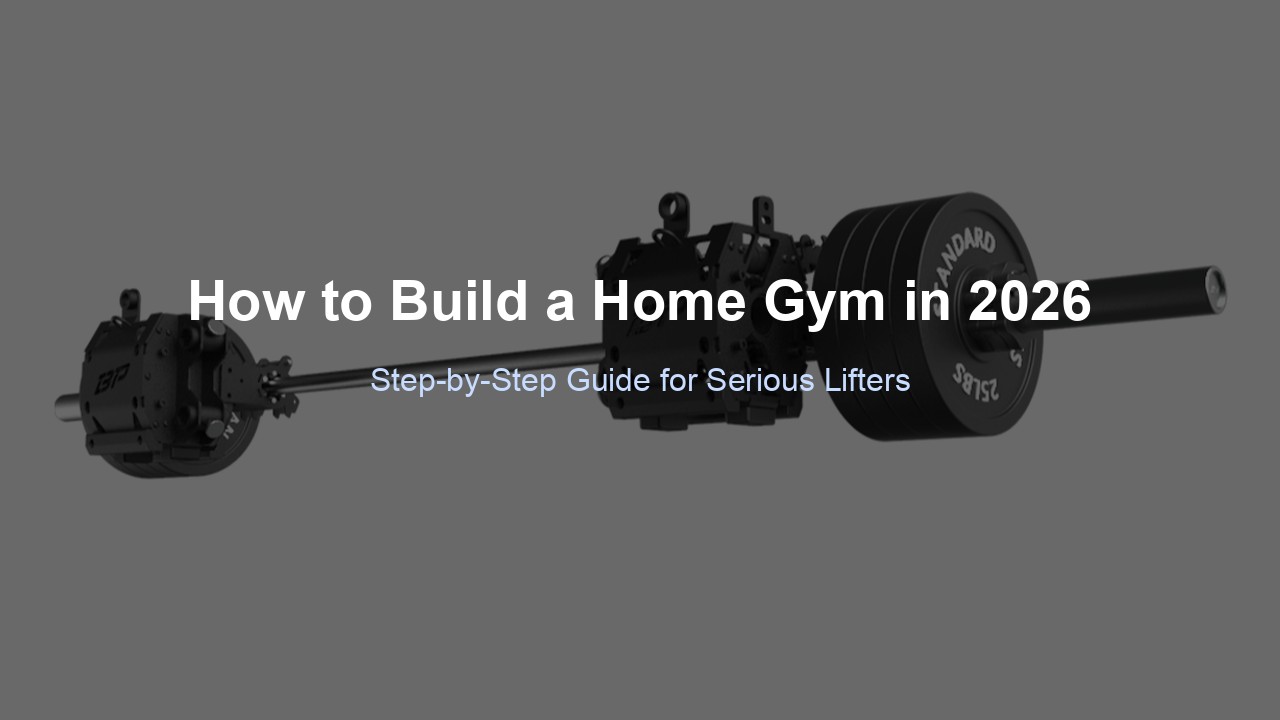
For lifters focused on building strength across all major movement patterns in a limited space, a modular leverage system like the Bulletproof Fitness VTS is the strongest anchor choice in 2026. The 11-gauge commercial steel construction handles serious loads. The footprint works in standard-size rooms. And the buy-once-expand-forever design means the system grows as training needs grow — chest press coverage today, vertical belt squat attachment next month, 3D handles after that.
The VTS ecosystem covers: horizontal push, horizontal pull, vertical push, quad-dominant lower body (with the belt squat), and multiple accessory movements through the handle attachment system.
How to Build a Home Gym: Equipment Purchase Order
Once the anchor piece is selected, this is the order that makes practical sense:
Phase 1 – Foundation:
1. Flooring (rubber mats or platform)
2. Anchor machine (rack or modular system)
3. Adjustable bench (flat minimum, incline preferred)
Phase 2 – Free Weights:
4. Adjustable dumbbells (PowerBlock or similar) OR fixed dumbbell set
5. If rack-based: barbell and weight plates
Phase 3 – Expansion:
6. Machine attachments that fill movement pattern gaps
7. Specialty equipment (Pendulum Squat, belt squat, etc.)
8. Cardio (assault bike, rower — not a treadmill, which takes excessive floor space)
Resist buying Phase 3 equipment before Phase 1 and 2 are fully operational. Training in a half-built gym builds bad habits.
How to Build a Home Gym: Lighting and Ventilation
Two details that get overlooked until the gym is already built:
Lighting: Dark garages need lighting upgrades. LED shop lights (5,000K daylight spectrum) on the ceiling above the training area are inexpensive and meaningful for training quality. Budget $80-150 for 2-3 fixtures.
Ventilation: Enclosed spaces accumulate heat during training. A box fan at minimum; a wall-mounted exhaust fan if the budget allows. A gym that overheats by session 20 minutes in limits training quality.
Mirrors: Optional but useful for form checking. A single 48×60-inch mirror on the primary pressing wall runs $80-120 at home improvement stores.
How to Build a Home Gym: Common Mistakes
Buying cardio first. Treadmills and ellipticals take significant floor space and are used less frequently as training habits develop. Resistance equipment provides more training return per square foot.
Underestimating weight plate storage. Plates need to live somewhere. A vertical plate tree or horizontal storage peg takes roughly 2 square feet and keeps the training area clear.
Skipping assembly help for heavy equipment. Modular systems and racks often weigh 200-400 lbs assembled. Having a second person during assembly prevents injury and speeds setup significantly.
Not anchoring equipment to the wall or floor. Any machine that can tip during training should be anchored. This is a safety requirement, not optional.
Buying the cheapest option in a category that matters. A cheap bench that wobbles at 200 lbs of loaded bar weight is actively dangerous. A cheap cable machine with thin steel will fail at the welds under regular use. In equipment that supports heavy loads, quality is a safety feature.
How to Build a Home Gym: Setup Checklist
Before the first training session, verify:
- [ ] Flooring is secure and covers the full equipment footprint
- [ ] All bolts and connections are tightened to spec (re-check after the first week of use)
- [ ] Equipment is level (use a carpenter’s level on the frame)
- [ ] Weight capacity of the equipment matches the intended training loads
- [ ] Storage for plates and dumbbells is in place
- [ ] Lighting is adequate to see form clearly
- [ ] Ventilation is in place
Building a Home Gym: The Long-Term Perspective
The total cost of a home gym built on quality equipment is typically recovered in gym membership fees within 2-4 years. A $2,500 setup at $100/month savings breaks even in 25 months. After that, every session is free.
More importantly, the convenience of training without commute or schedule constraints produces more consistent training — and consistency is the variable that produces results more reliably than any specific program or equipment choice.
Learning how to build a home gym correctly — starting with the space, planning the budget honestly, choosing the anchor piece based on training needs, and buying quality first — is the framework that makes the investment pay off for years rather than months. For a detailed breakdown of the VTS system as an anchor piece, see the full Bulletproof Fitness Equipment review.