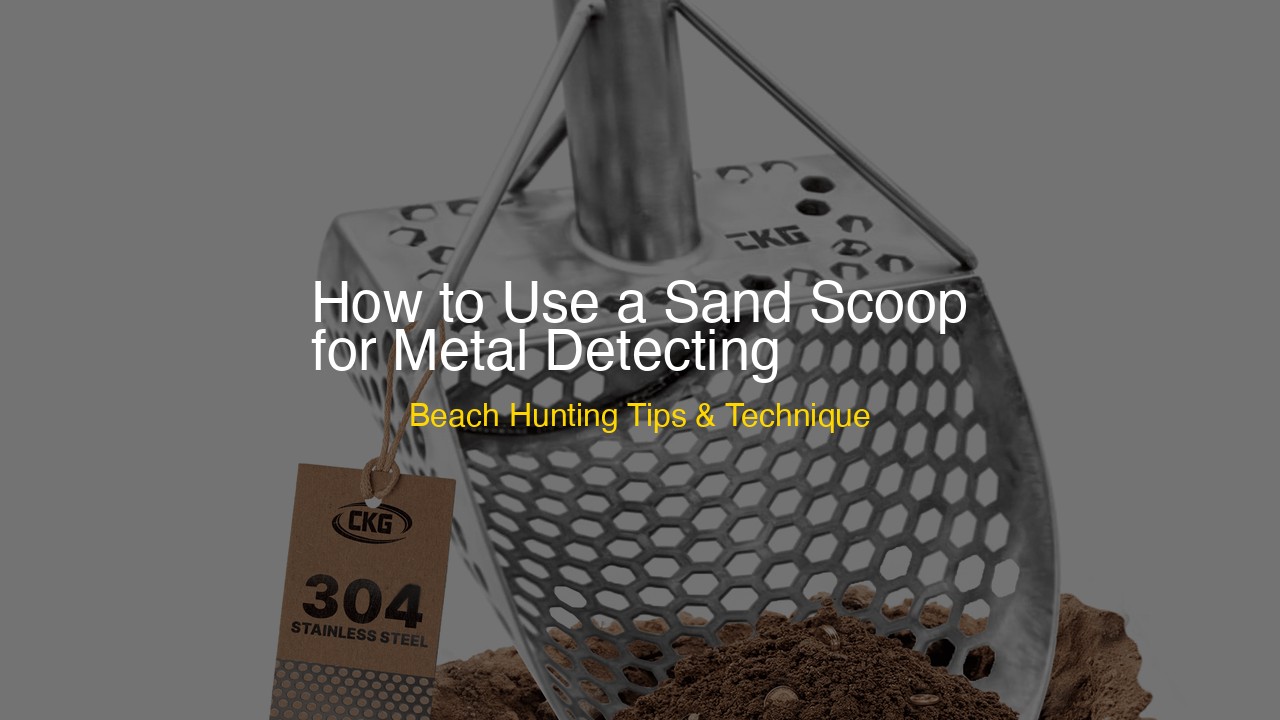
Knowing how to use a sand scoop for metal detecting correctly makes the difference between a session where you find and recover targets efficiently and one where you spend most of your time re-digging the same holes and churning sand. The technique is learnable in a few sessions, but starting with the right method saves you from developing bad habits that are harder to unlearn. This guide walks through gear selection, signal interpretation, digging approach, and target recovery step by step.
How to Use a Sand Scoop for Metal Detecting: The Right Tool First
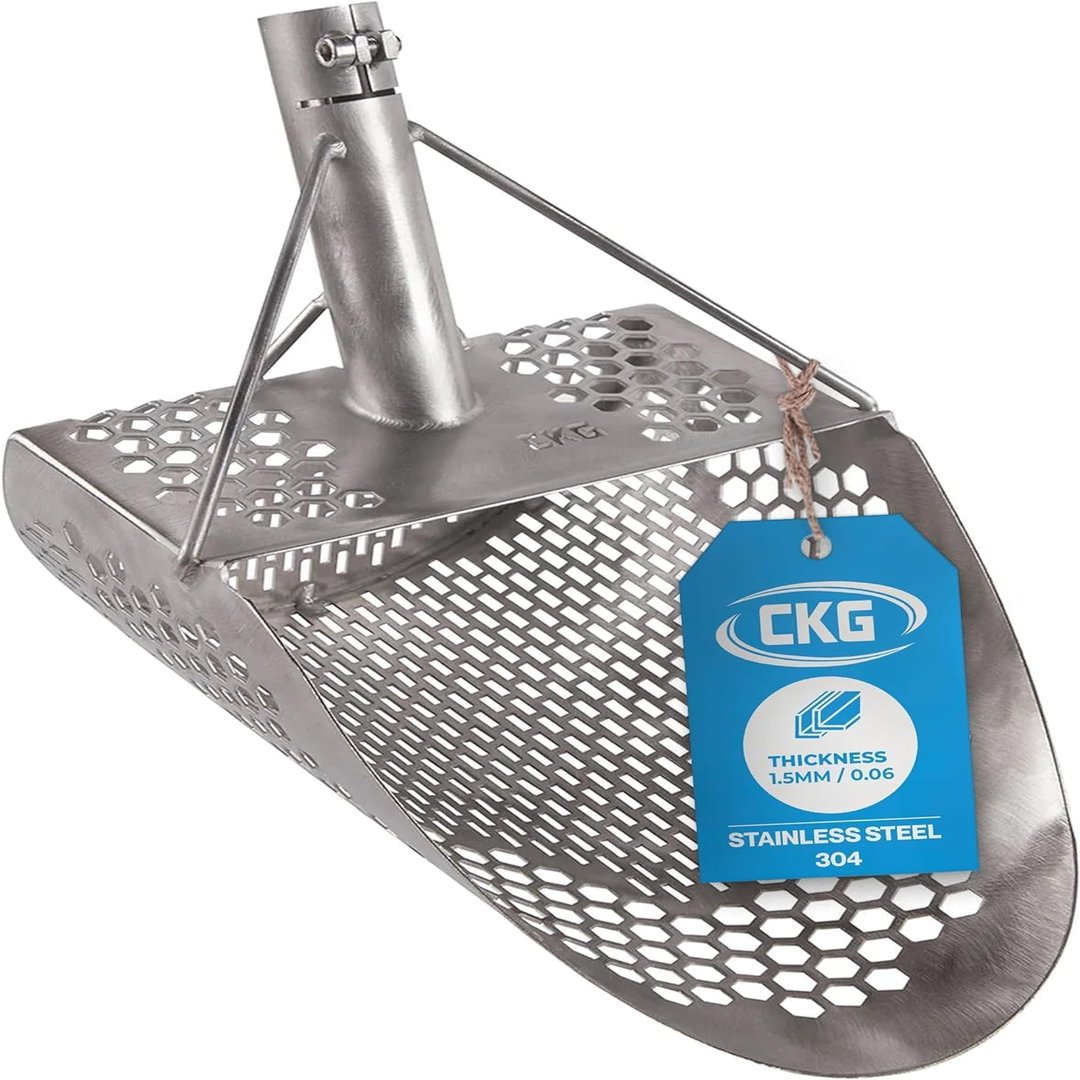
The technique only works if your scoop is functional. A scoop with slow drainage forces you to shake the basket repeatedly, adds fatigue, and often lets small targets roll out. A scoop with poor construction fails at the handle joint mid-session. Getting the right tool is step zero before any technique discussion.
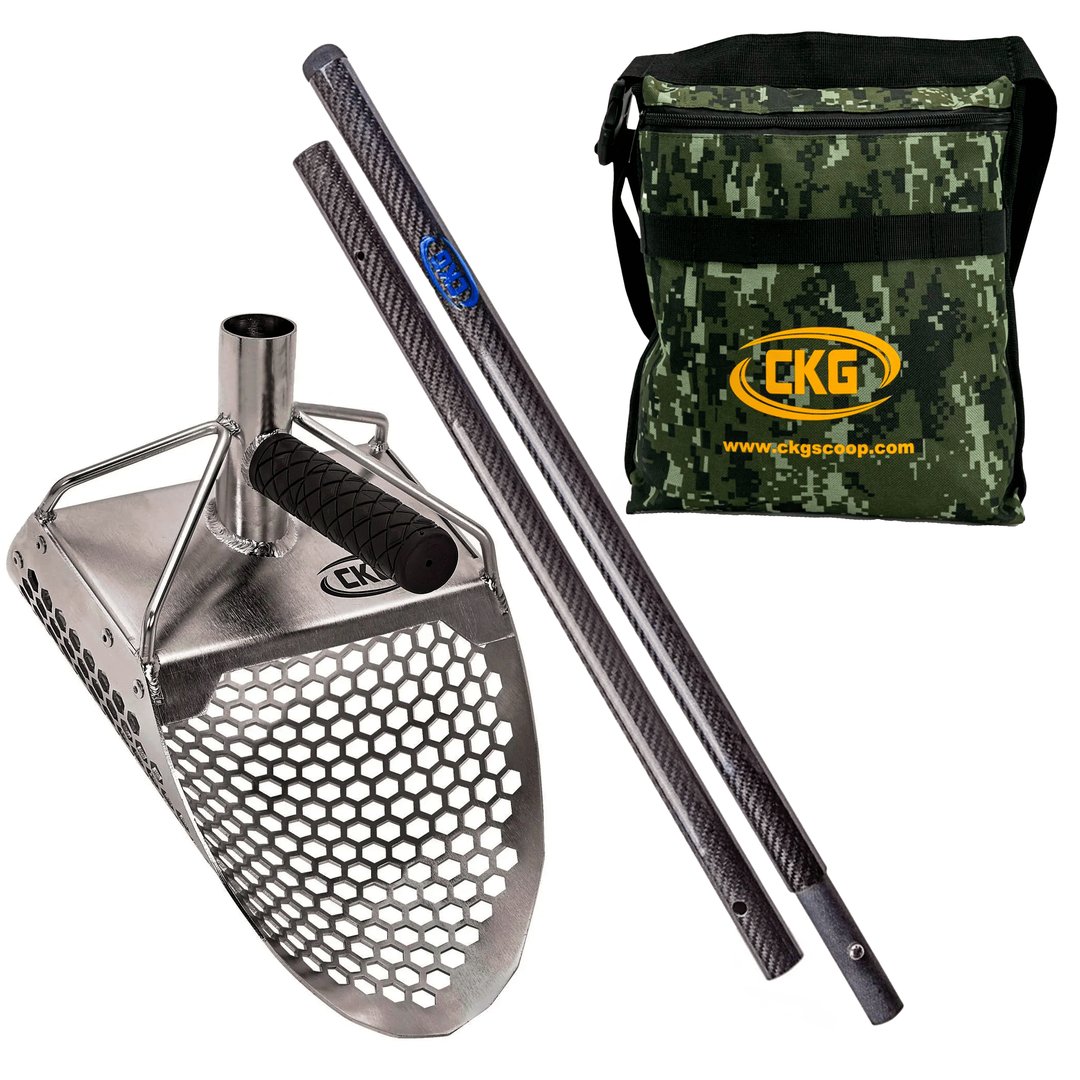
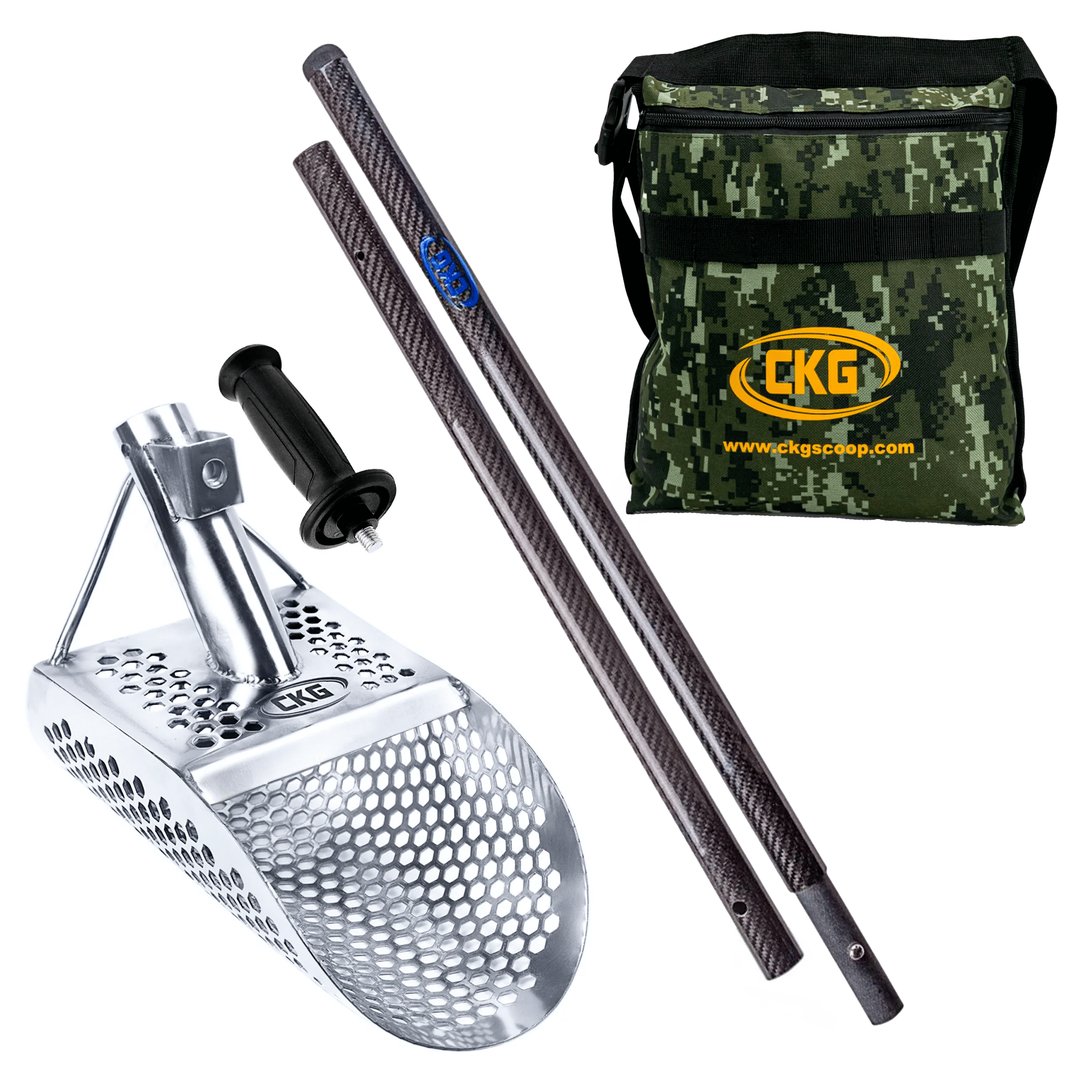
For beach detecting, a stainless steel 304 or titanium basket with a hexagon hole pattern drains the fastest. The CKG Treasure Seeker Kit at $88.99 is the most complete starting point: it includes the scoop, a digging tool, and accessories in a single purchase, so you’re not sourcing components from multiple places.
If you already have a detector and just need a scoop, the CKG 9×6 at $94.99 (steel) or CKG 11×7 with carbon handle at $199.99 (for serious beach use) are the two models with the most consistent field feedback. Both use hexagon drainage holes and hand-welded baskets – the construction that holds up to aggressive, repetitive use.
How to Set Up Before You Start
Before you detect, check three things:
Scoop assembly: If your scoop has a separate handle, make sure the connection is tight. A loose handle-to-basket joint wastes energy and can fail mid-session. CKG scoops use a secure threading system – check that the handle is fully seated and not wobbling.
Handle length: A handle that’s too short forces you to bend at the waist for every recovery – a posture that becomes painful within an hour on active sand. Ideally, your handle plus scoop length should let you plunge the basket and lift without bending your back. Most adult detectorists find 44-48 inch total length optimal. If you’re taller than 6 feet, go longer.
Detector settings: Before getting into technique, make sure your detector is ground-balanced correctly for wet sand. Wet beach sand is mineralized and will throw false signals if your detector isn’t adjusted for the specific soil conditions. Consult your detector manual for beach mode or salt ground balance settings.
How to Use a Sand Scoop for Metal Detecting Step by Step
Step 1: Mark the signal location.
When your detector signals, don’t immediately start digging. Slow down over the signal and listen for the peak response – the loudest point of the signal tone. Rock the detector slightly left and right, then forward and back, to locate the exact center of the signal. Mark that point with your foot.
Step 2: Push the scoop into the sand.
Position the scoop directly over the signal center and push it into the sand at roughly a 45-degree angle, leading with the front edge of the basket. Push forward and down simultaneously, using the full depth of the basket. In dry sand, this is easy. In wet compacted sand, you may need to apply significant downward force. Use your body weight rather than just arm strength – step onto the handle if needed for resistant soil.
Step 3: Lift with a scooping motion.
Once the basket is fully seated, rotate the handle upward to scoop a plug of sand out of the hole. Lift the scoop completely out of the hole and hold it level so sand and water can drain through the hexagon holes. Give it two or three gentle shakes – don’t shake aggressively, as small rings and coins can flip out of the basket over the edge.
Step 4: Scan the basket with your detector.
Hold the scoop basket near your detector coil (6-8 inches below it) and sweep slowly. If the detector still signals, the target is in the basket. If no signal, the target is still in the hole – pass your detector over the hole to confirm, then scoop again from the same location.
Step 5: Locate the target in the basket.
Once you’ve confirmed the target is in the basket, tilt the scoop slightly and use your hand or a small probe to sift through the remaining sand. Work methodically from one side to the other. Small targets like rings, chains, and thin coins like to hide in corners of the basket – run your finger along each edge before concluding the target isn’t there.
Step 6: Recover the target.
Remove the target and check it. If it’s trash (bottle caps, pull tabs, foil), pack it out with you – leaving holes open or trash scattered makes it harder for the next detectorist and creates friction with beach management. If it’s a find worth keeping, secure it in a finds pouch or bag immediately.
Step 7: Fill the hole.
Return the sand plug to the hole and press it down flush with the surrounding surface. On maintained beaches and parks, clean hole fills are important for keeping detecting permitted. A good scoop technique that produces a clean cylindrical hole is far easier to fill than an irregular torn-up area.
How to Use a Sand Scoop for Metal Detecting: Reading and Recovering Targets
Different targets signal and recover differently. Knowing what to expect speeds up your recovery process significantly.
Coins: Coins produce clear, consistent tones on most detectors. They tend to sit flat in the sand after settling, which means the initial scoop usually recovers them cleanly. Older coins may be encrusted with salt deposits and look like rocks initially – don’t discard anything that isn’t obviously modern trash before checking.
Rings: Jewelry rings produce variable signals depending on metal content. Gold rings often produce the same tones as pull tabs, which is why experienced detectorists learn to dig all non-ferrous signals in productive beach areas. Rings are light and round, making them easy to miss in the basket – run your fingers along the basket bottom and corners before re-scanning the hole.
Chains and thin jewelry: These are the hardest targets to see in the basket because they’re thin and blend with sand. After draining, tip the basket slowly while scanning with your eyes for any linear glint. Chains tend to drape over basket hole edges in a way that makes them nearly invisible from above – check underneath the scoop as well.
Ferrous trash: Iron targets (nails, can lids, wire) produce low or broken tones on most detectors. Depending on your settings, you can ignore or discriminate these. In areas with heavy iron contamination (near old piers, historic beach areas), all-metal mode helps ensure you’re not skipping good targets that happen to be adjacent to iron.
How to Use a Sand Scoop for Metal Detecting in Wet vs. Dry Sand
The technique varies between wet and dry beach zones.
Dry upper beach: Sand drains instantly. You can use a smaller basket (9×6) with more precision. The scoop slides in easily and plugs come out cleanly. Focus on pushing straight down and lifting cleanly to maintain defined holes. Recovery speed is fast – most targets clear the basket in one or two shakes.
Wet mid-beach: Wet sand is heavy and water-logged. You need a larger basket (11×7 or 11×8) to capture enough volume per scoop, and fast-draining hexagon holes to clear the water quickly. Targets tend to settle deeper in wet sand due to wave action, so push the scoop deeper than you think necessary. Expect to scoop two to three times per target in high-traffic wet zones.
Tidal zone: Working the tidal wash zone requires attention to wave timing. After each wave recedes, you have a 15-30 second window to scan and start recovering before the next wave. Keep your scoop in the water during recovery so you can see the target once sand washes away. The CKG PRO Titanium is ideal here because repeated saltwater exposure is manageable without rinsing between every recovery.
Shallow wading: Some detectorists wade in ankle-to-knee-deep water during low tide to hit productive drop zones near old pier structures or popular swimming areas. Use a fully submersible scoop (stainless or titanium – no painted steel) and expect targets to be buried deeper than on dry sand. Recovery in moving water requires holding the scoop steady against the current.
Common Mistakes When Using a Sand Scoop for Metal Detecting
Shaking too hard: Aggressive shaking throws targets out of the basket, especially lightweight jewelry. Two to three gentle shakes is all that’s needed with a proper hexagon drainage scoop.
Not filling holes: Leaving open holes on public beaches is one of the fastest ways to get detecting banned from a spot. Always fill. Always press the plug back down flush.
Skipping the hole check: After recovering what you think is the target, always re-scan the hole before moving on. Some targets are found in pairs (dropped near each other). Jewelry sometimes breaks and the clasp is separate from the main piece.
Using a scoop that’s too small for wet sand: A 9×6 basket in waterlogged beach sand often means three to four scoops per target instead of one or two. The extra work multiplies your fatigue across a full session. Match basket size to environment.
Not rinsing after saltwater sessions: Even stainless steel 304 benefits from a freshwater rinse after saltwater use. It extends the life of the welds and prevents salt crystal buildup in the holes. Thirty seconds under a beach shower or faucet keeps the scoop in better condition long-term.
For a full comparison of CKG models and how they perform in different environments, see the CKG Sand Scoop review or the complete guide to the best sand scoop for metal detecting.