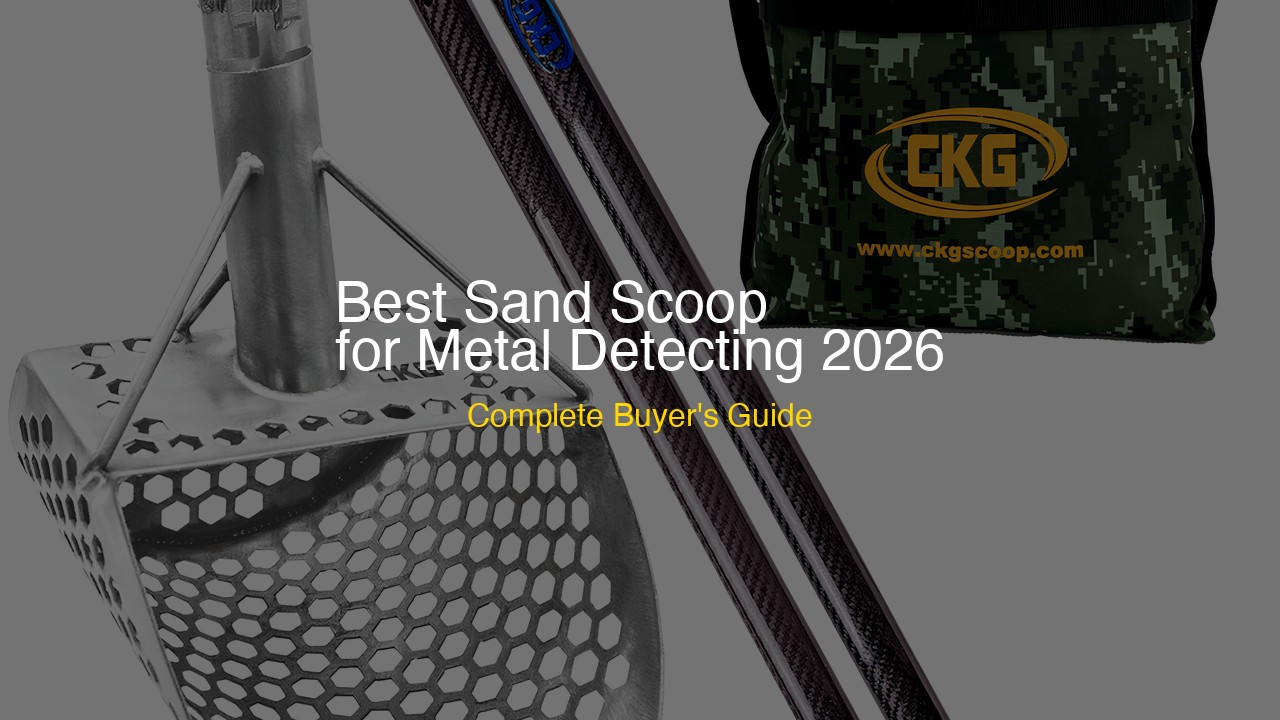
Metal detecting is one of those hobbies that rewards patience – but only if your gear doesn’t slow you down. The sand scoop is the single piece of equipment you’ll use on every single find, and a bad one will make you dread each signal. This guide covers everything you need to choose the best sand scoop for metal detecting in 2026: materials, hole patterns, handle options, size considerations, and the specific models worth your money.
The Best Sand Scoop for Metal Detecting: CKG 11×7 with Carbon Handle
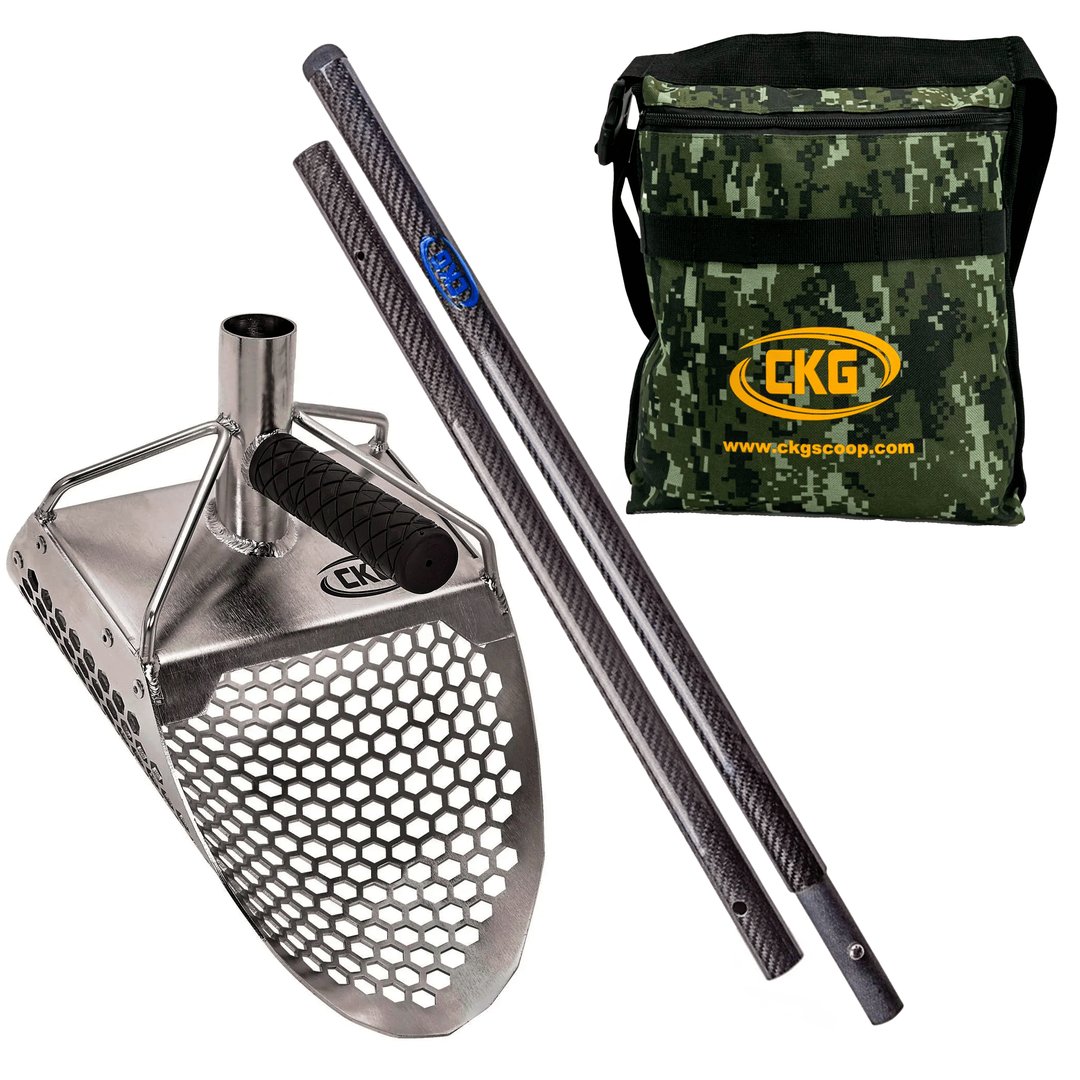
After testing multiple scoops across beach and park environments, the CKG 11×7 Stainless Steel Sand Scoop with Carbon Handle consistently ranks as the best sand scoop for metal detecting for most hobbyists. Here’s why it earns that position.
CKG has been building scoops in Florida since 2017, and their approach is fundamentally different from mass-produced options. Every scoop is hand-welded, not stamped. Stamped scoops are punched from sheet metal in a single press – fast to manufacture but weak at the welds and prone to cracking under heavy use. Hand-welded construction means each joint is individually joined and inspected, resulting in a basket that can take thousands of digs without failing.
The 11×7 basket size hits the sweet spot for beach detecting. Large enough to capture targets in a single scoop on most dry sand, but not so oversized that it becomes unwieldy in wet-packed sand. The hexagon hole pattern drains fast – far faster than circular or square holes – which means less time shaking and more time scanning.
The carbon fiber handle adds a meaningful upgrade over steel pipe handles. Carbon handles are lighter and stiffer, transmitting less vibration to your wrists over a long session. If you detect for two or three hours at a stretch, that weight difference becomes very real by hour two.
At $199.99, this is a serious purchase. But with 4.9 stars from over 50 verified detectorists and a 1-year warranty backed by a brand that actually answers support questions, it’s built to last years rather than seasons.
What Makes a Good Sand Scoop for Metal Detecting
Before buying, understand what separates a quality scoop from a cheap one. The differences aren’t always visible from photos, but they become obvious within the first few outings.
Material matters most. The best sand scoops are built from stainless steel 304 or titanium. Stainless 304 is corrosion-resistant, hard enough to handle rocky sand, and affordable enough that it can be used in salt water without paranoia. Titanium is lighter and completely rust-proof, but costs significantly more. Cheap scoops use painted carbon steel – they rust within a season, especially in saltwater environments.
Hole pattern affects drainage speed. The shape and size of the drainage holes determines how quickly water and fine sand escape when you lift the scoop. Hexagon patterns are widely regarded as the most efficient: more open area per square inch than circles, and the interlocking geometry maintains structural strength even when holes are closely spaced. If you’re detecting wet beach sand with significant water content, hole efficiency directly affects how quickly you can locate a small target inside the basket.
Basket size determines coverage. A wider basket captures more volume per scoop, reducing the number of times you need to dig to recover a target. But wider baskets are heavier and harder to push into compacted sand. Most experienced detectorists use an 11-inch basket for open beach sand, and drop to a 9-inch for parks, fields, or compacted terrain where smaller surface cuts are cleaner.
Handle length and material affect fatigue. A scoop with no handle forces you to bend at the waist for every recovery. Most quality scoops ship with or offer handles ranging from 24 to 48 inches. Carbon fiber handles are lighter than aluminum and far lighter than steel pipe – the difference matters across a three-hour session. If you’re over 5’8″, a 48-inch handle keeps you upright the entire time.
Welding quality determines lifespan. Ask whether a scoop is hand-welded or stamped. Stamped means the basket edges are pressed into shape – fast to manufacture, but the stress points crack. Hand-welded means each joint is bonded individually, producing a scoop that can handle aggressive use in rough conditions without failing at the seams.
Best Sand Scoop for Metal Detecting on a Budget
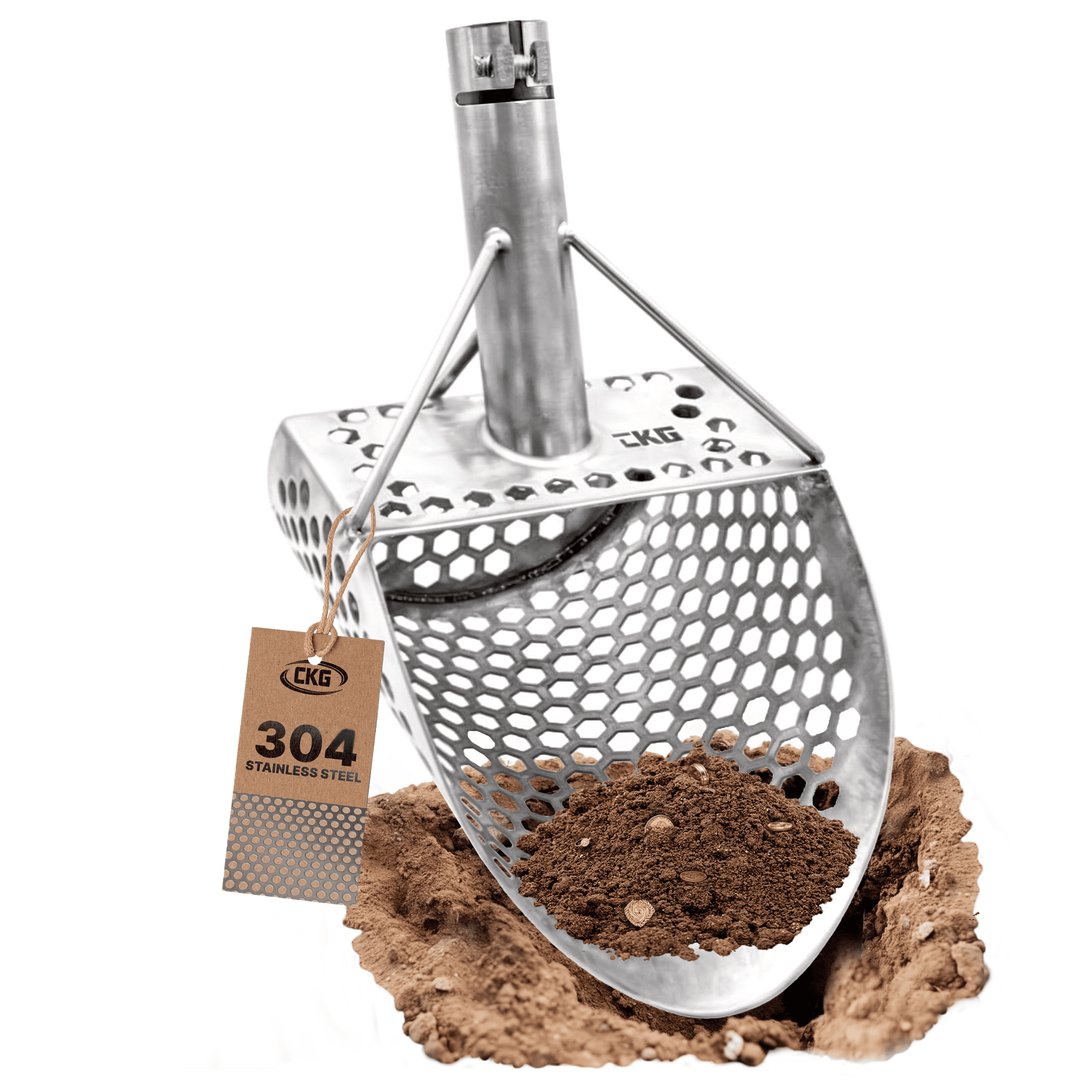
Not every detectorist needs to start at the premium tier. If you’re new to the hobby and want to test whether beach detecting is something you’ll stick with, CKG’s 9×6 Sand Scoop at $94.99 is the most honest entry-level option available.
The 9×6 uses the same stainless steel 304 construction as CKG’s more expensive models – you’re not getting a compromised material to hit a lower price point. The basket is smaller, which works well for parks, fields, and dry beach sand where you’re not moving large volumes per scoop. The hexagon drainage is still present, so sand release is efficient.
The tradeoff is size: on wet beach sand where targets sink deep, a 9×6 basket means you may need two scoops per recovery instead of one. That’s acceptable for beginners who are still developing their technique. Once you’ve confirmed this is a hobby you’ll pursue seriously, upgrading to the 11×7 makes immediate practical sense.
At $94.99, it holds 4.9 stars from 57 verified buyers – the ratings don’t dip just because the price does. This is a legitimate scoop that will outlast cheaper options sold for similar prices on marketplaces.
Best Premium Sand Scoop for Metal Detecting: Titanium
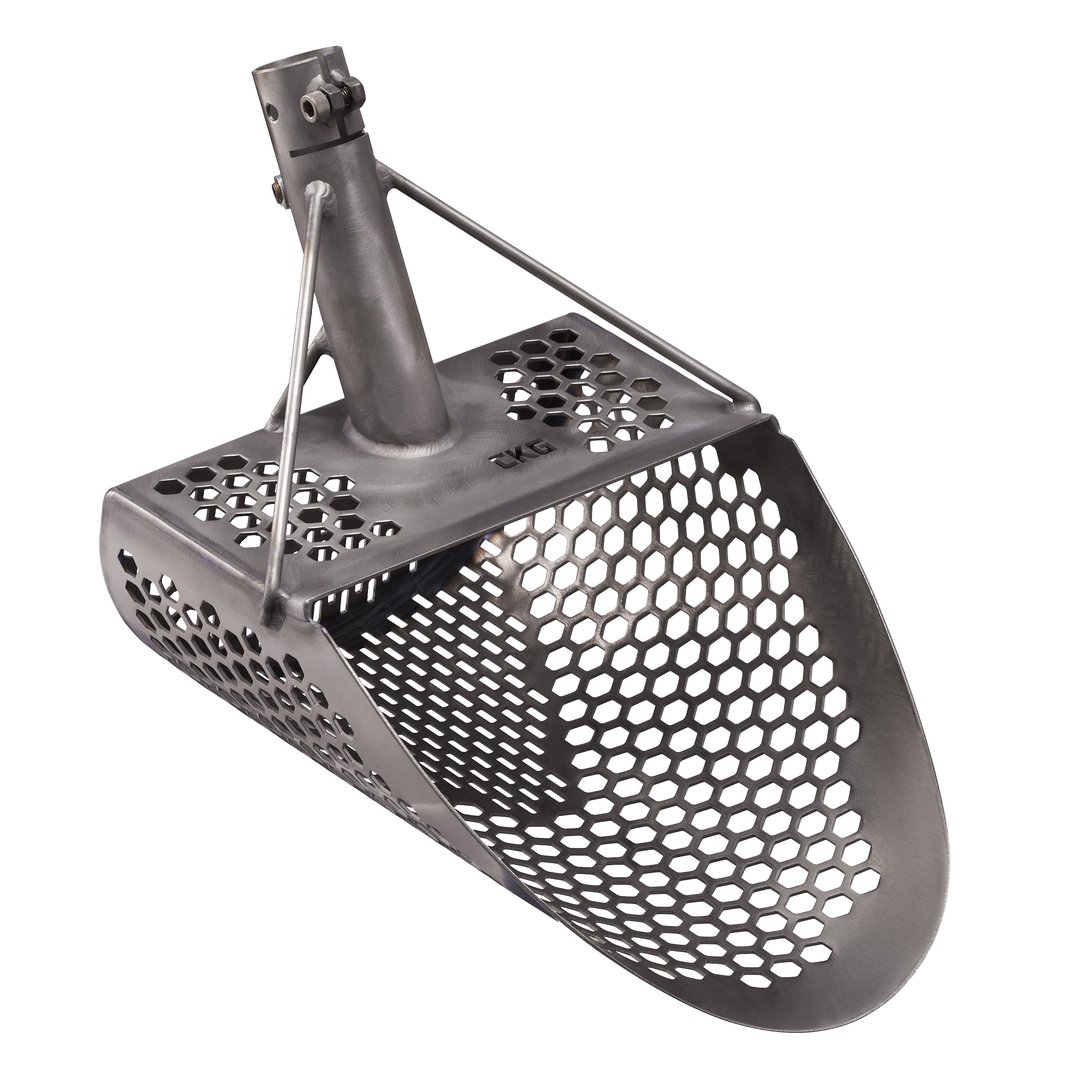
For detectorists who hunt salt beaches regularly or spend full days detecting, the CKG PRO Titanium Sand Scoop represents the top of the range for practical use.
Titanium is rust-proof by nature, not by coating. A stainless steel scoop will hold up in saltwater for years if rinsed after every session. But if you’re hunting in tidal zones multiple times per week and can’t always rinse immediately, titanium eliminates the maintenance concern entirely. There’s no salt corrosion to worry about, no coating to scratch, no surprise rust spots.
The second advantage is weight. Titanium is roughly 45% lighter than an equivalent steel basket. Over a six-hour session in the sand, that weight difference is significant – your shoulder, wrist, and forearm do less work per scoop, letting you detect longer before fatigue sets in.
Currently priced at $255.99 (down from $284.99), the PRO Titanium carries 4.8 stars. It’s the right upgrade for dedicated hunters who detect frequently enough that weight and corrosion resistance directly affect the quality of their outings.
Best Sand Scoop for Metal Detecting by Environment
Different detecting environments call for different tools. Here’s a quick breakdown:
Beach (wet sand): Choose the largest basket you can manage – CKG 11×7 or 11×8. Wet sand is heavy and waterlogged, so fast drainage holes and a wide capture area reduce the number of re-digs. A longer handle (48 inches) keeps you upright while the tide moves around you.
Beach (dry sand): Any size works well in dry sand since drainage happens fast. The 11×7 is still ideal, but an 11×8 basket can speed up recovery. The 9×6 is sufficient if you’re covering a smaller area.
Park and field: The 9×6 excels here. Parks often have compacted soil mixed with grass roots, and a smaller, sharper basket edge cuts through cleanly without destroying the plug. The CKG Universal at $108.99 is specifically designed for versatility across environments.
Shallow water: For wading in inches of water around tide pools or river edges, the Titanium scoop’s rust-proof construction makes it the logical choice. The 9×6 size works well in confined shallow areas.
Relic hunting: Field and forest relic hunting often involves dense soil and clay. A steel scoop edges over titanium here because the rigidity of steel 304 handles impacts with buried rocks better.
How to Evaluate Any Sand Scoop for Metal Detecting
Whether you’re buying from CKG or comparing options, run through this checklist before purchasing:
- Material: Is it stainless 304, titanium, or painted carbon steel? Only the first two are suitable for serious detecting.
- Construction: Hand-welded or stamped? Look for this in the product description – it’s a key differentiator.
- Hole pattern: Hexagon or circular? Hexagon drains faster.
- Basket dimensions: Measure your current hunt areas – dry beach, wet beach, park, or mixed?
- Handle: Is a handle included, or sold separately? What material? Can you extend it?
- Warranty: Does the brand back their product? CKG’s 1-year warranty and replacement parts availability is a significant positive signal.
- Reviews: Look for verified buyer reviews, not seller-generated content. CKG’s 32,000+ reviews across their product line indicate real-world validation.
The Best Sand Scoop for Metal Detecting: Final Recommendation
For most detectorists – beginners and experienced alike – the CKG 11×7 Stainless Steel Sand Scoop with Carbon Handle is the best sand scoop for metal detecting available in 2026. It combines hand-welded construction, a proven hexagon drainage pattern, a lightweight carbon handle, and a track record backed by over 32,000 detectorists who hunt with CKG gear.
If budget is the primary constraint, start with the CKG 9×6 at $94.99 – same quality of materials, smaller basket, lower cost. If you’re a dedicated frequent hunter on salt beaches, the PRO Titanium is worth the upgrade.
What you’re avoiding by choosing quality from the start: scoops that rust after a season, handles that snap under load, drainage holes that clog with fine sand, and baskets that bend when they hit a buried rock. A well-built sand scoop isn’t a luxury – it’s what separates a good session from a frustrating one.
The best sand scoop for metal detecting is the one that disappears into your process, recovers every target cleanly, and is still in your kit five years from now.