A portable ice bath makes cold plunge therapy accessible without a permanent installation, a dedicated room, or a $3,000+ commercial unit. The category has grown rapidly - there are now options at every price point from $99 foldable tubs to $799 precision-temperature systems, with meaningful differences in what you get at each tier.
This guide breaks down what to look for, what the tiers actually deliver, and which setup makes sense depending on how seriously you want to take cold therapy.
What a Portable Ice Bath Actually Does
Cold water immersion triggers a reliable set of physiological responses: vasoconstriction (blood vessels contract, reducing inflammation), release of norepinephrine (a neurotransmitter that improves focus and mood), and a shift in the nervous system toward parasympathetic dominance after you exit (which improves sleep and recovery).
These responses work best with water temperatures between 50-59°F (10-15°C) and sessions of 2-5 minutes. The “portable” aspect of a portable ice bath refers to whether it can be set up and taken down easily, moved between locations, or used outdoors without a permanent structure.
Most portable ice baths are either:
– Foldable/inflatable tubs filled manually with cold water and ice
– Rigid portable tubs that retain cold better but are heavier
– Chilled systems that use a pump and refrigeration to maintain temperature without continuous ice
Portable Ice Bath Options: Price Tier Breakdown
Entry Level ($99-$150): Foldable Tubs
The most affordable portable ice bath category. These are typically cylindrical or rectangular tubs made from layered insulated material - enough to hold body-temperature water cold for a full session when you add ice.
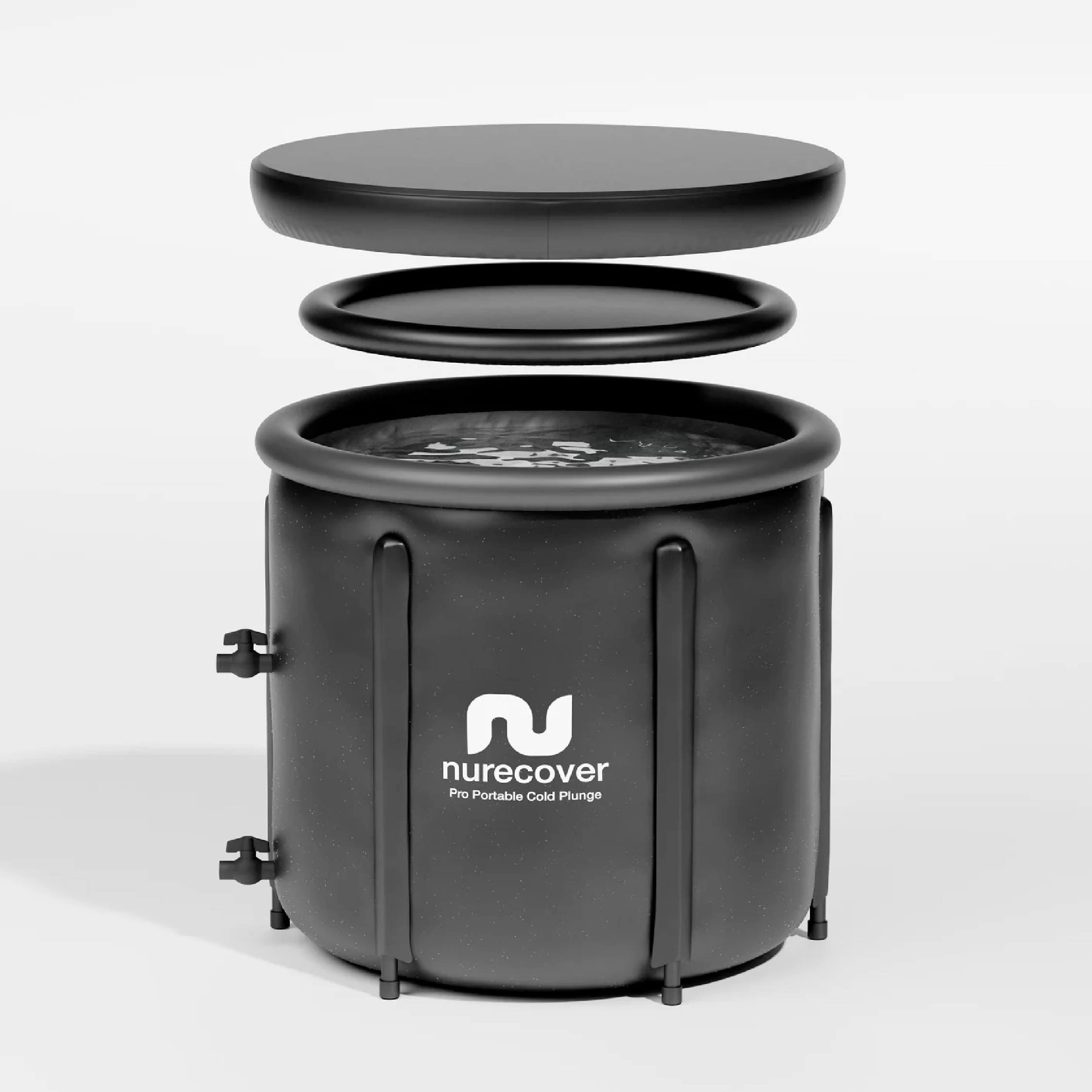
Nurecover Pod Ice Bath ($99): The most accessible entry point from the nurecover range. Compact and designed for portability - you can set it up outdoors, on a patio, or in a bathroom without a dedicated space. Comes with a 2-in-1 cover/carry bag ($10 separately), lid to retain cold for up to 8 hours, and support tubes for stability.
What you’re trading at this tier: You’re adding ice from an ice machine, ice bag, or freezer before every session. Water temperature depends on how much ice you add and ambient temperature. A cold day helps; a hot summer day works against you. This isn’t a limitation for most users - it’s exactly how millions of people do cold plunge daily - but it requires planning.
Who it’s for: Anyone new to cold therapy who wants to establish a habit before committing to a larger investment, or those with limited space who need something that stores flat.
Mid Tier ($150-$400): Rigid Portable Tubs
Rigid tubs hold their shape, retain cold longer (better insulation, no thermal bridging from folds), and typically have a more stable structure for getting in and out.
The advantages over entry-level: better insulation means ice lasts significantly longer, and the structural stability is more comfortable for extended sessions.
The trade-off: These are heavier and don’t compress for storage. If you’re moving your portable ice bath between locations regularly, a rigid tub requires more effort than a foldable option.
Premium ($599-$799+): Chilled Portable Systems
This tier adds active temperature control. Instead of ice, a refrigeration unit circulates chilled water through the tub, maintaining a consistent temperature you set.
Nurecover Chiller - SubZero Water Chiller ($599): Eliminates ice entirely. Connects to your existing portable tub and maintains temperature automatically. “SubZero” refers to its ability to chill water below freezing-adjacent temperatures - colder than typical ice water, which makes it useful for people who have adapted to standard cold plunge temperatures and want to go deeper.
Nurecover Plunge Ice Bath ($799): A full cold therapy system with integrated temperature control. The Plunge is designed as a precision recovery tool - you set a temperature, it holds it, and you don’t think about it. The $799 price includes the chilling mechanism.
Who it’s for: People doing cold plunge daily as a committed practice, athletes doing structured recovery protocols, or anyone who finds ice management a friction point that disrupts their habit.
The Best Portable Ice Bath Bundles
Buying the tub and chiller separately works, but bundles offer better value:
Pro Bundle (SaunaPro + Plunge) ($597): Combines the SaunaPro® Red-Light Sauna with the Plunge Ice Bath. The contrast therapy protocol - heat followed by cold - is one of the most evidence-supported recovery methods available. The bundle saves $350 versus buying both separately.
Elite Bundle (SaunaPro + Plunge + Chiller) ($899): The full system, designed for serious recovery. The sauna heats you to 185°F with red-light therapy, then the Plunge brings you to your cold plunge temperature. Worth noting: the Elite Bundle at $899 represents significant savings versus the $349 + $799 individual pricing if you’re eventually buying both.
Setting Up a Portable Ice Bath at Home
Space Requirements
A standard portable ice bath requires roughly 3-4 square feet of floor space when set up. Most residential bathrooms accommodate this, but check the door clearance - the Nurecover Pod is designed to fit through standard doorways when collapsed.
Outdoors: Works well in any covered outdoor area during warmer months. Direct sun will warm the water faster; shade or a cover maintains temperature longer.
Drainage: The main logistical consideration. You’ll need to drain 80-120 gallons of water after each session. A backyard or drain-accessible bathroom space simplifies this significantly. The Pod’s cover/carry bag doubles as a closure during storage.
Water Temperature Protocol
For your first sessions:
– Aim for 55-60°F (13-16°C) - easier to acclimate to than colder temperatures
– Start with 2 minutes, increase to 5 minutes over 2-3 weeks
– Exit slowly and allow your body to rewarm naturally before showering
Adding ice math: a standard 44-lb bag of ice typically drops 50 gallons of tap water to 50-55°F in warm conditions. In a cold season or with cold tap water, you may need less.
Accessories That Help
Ice Bricks - 3 Pack ($39): Reusable ice blocks that you freeze and add to the tub. More cost-effective than buying ice bags over time and maintain temperature without the mess of loose ice.
Floating Waterproof Thermometer ($9): Essential for tracking actual water temperature rather than guessing. Temperature matters - “cold water” can mean anything from 65°F (too warm for significant response) to 45°F (intense for most beginners).
Portable Ice Bath Lid ($10): Holds ice temperature for up to 8 hours. Useful if you prepare your ice bath the night before or want to maintain temperature between morning and evening sessions.
Portable Ice Bath Benefits: What the Research Shows
The evidence base for cold water immersion is solid on several fronts:
Muscle recovery: Studies consistently show reduced muscle soreness (DOMS) and faster return to full strength after cold water immersion compared to passive recovery. The mechanism is reduced inflammation and edema in worked muscle tissue.
Mental performance: Cold exposure triggers a significant norepinephrine release - 200-300% increases have been documented in studies. Norepinephrine affects focus, attention, mood, and energy. The effect lasts several hours post-immersion.
Sleep: Cold therapy shifts the nervous system toward parasympathetic dominance, which is the state associated with deep, restorative sleep. Morning cold plunge (particularly) has shown improvements in sleep quality in multiple studies.
Metabolic effects: Regular cold exposure activates brown adipose tissue (brown fat), which generates heat by burning calories. The metabolic effect of cold therapy is modest but real, particularly for people doing it daily.
Portable Ice Bath vs. Alternatives
Cold Shower
A cold shower reaches approximately 60-70°F at the lowest setting in most homes - warmer than the optimal cold plunge range. Surface area covered is limited to the water stream. Cold showers have benefits and are better than nothing, but the physiological response is meaningfully smaller than full immersion at 50-55°F.
Verdict: Cold showers are a starting point, not a replacement.
Lake or Ocean Swimming
Natural cold water swimming provides the full immersion benefit but with no temperature control, safety uncertainty, and seasonal limitation. For people near suitable water, this is a viable option in certain months.
Verdict: Seasonal and location-dependent. A portable ice bath extends cold therapy year-round.
Cryotherapy Chambers
Liquid nitrogen cryotherapy chambers produce extreme cold (-110°C to -160°C) for very short sessions (2-3 minutes). Research comparing cryotherapy to cold water immersion generally shows cold water immersion as more effective for muscle recovery - the water conducts cold significantly better than cold air at similar temperatures.
Verdict: Cold water immersion beats cryotherapy for recovery. Portable ice baths also beat the $40-60/session cost of commercial cryotherapy.
FAQ: Portable Ice Bath
How much ice does a portable ice bath need?
Plan for 40-80 lbs of ice per session depending on tub size, water starting temperature, and ambient conditions. Reusable ice bricks reduce ongoing ice costs.
Can I use a portable ice bath indoors?
Yes. Any area with access to water and drainage works. Bathrooms are the most common indoor location. Ensure the floor surface can handle water spillage.
How long do portable ice baths last?
Quality portable ice baths (like the Nurecover Pod) are designed for regular use. The insulated material holds up to repeated setup/teardown cycles.
What temperature should a portable ice bath be?
Start at 55-60°F (13-16°C) for your first sessions. Experienced cold plungers typically work in the 50-55°F range.
For a full breakdown of the nurecover product line including the Pod, Plunge, and SaunaPro, see the Nurecover review. For a step-by-step guide to your first session, see how to take a cold plunge at home.