Knowing how to protect skin while gardening goes beyond sunscreen. A full garden session exposes skin to sun, mechanical damage (thorns, rough bark, tools), contact irritants (poison ivy, nettles, plant oils), insects, and soil - each requiring a slightly different protective approach. Getting all of these right means you finish a long session without sunburn, scratches, or a rash.
This guide covers the practical approach to skin protection for gardeners, layer by layer.
Why Gardening Is Hard on Skin
Most outdoor activities have one primary skin hazard - hiking is mostly sun exposure, swimming is mostly chlorine. Gardening layers multiple hazards simultaneously:
UV exposure accumulates quickly during outdoor work. Morning sessions feel mild, but reflected light from soil and low sun angles mean UV exposure starts early. Extended sessions without protection add up to significant cumulative damage over a growing season.
Physical contact is constant. Thorns on roses, blackberries, and hawthorn are obvious hazards, but rough bark, wood edges, dried plant stems, and wire supports all scratch exposed forearms regularly during normal garden work.
Contact irritants include urushiol (the oil in poison ivy, poison oak, and poison sumac that causes the characteristic rash), nettle fibers, euphorbia sap, and various plant allergens. Contact can happen without realizing it - touching a tool that brushed a poison ivy leaf, or reaching through an area with hidden nettles.
Insects - mosquitoes, gnats, and biting flies are active during the same morning and evening windows when garden work is most pleasant.
Soil and compost contact is a minor irritant for most people but can cause issues for those with sensitive skin or skin conditions.
How to Protect Skin While Gardening: Layer by Layer
Layer 1: UPF Clothing for Arms and Torso
This is the highest-leverage protection for gardeners who spend extended time outdoors. UPF 50+ clothing blocks 98% of UV radiation and provides physical protection against thorns and plant contact simultaneously - one layer that addresses multiple hazards.
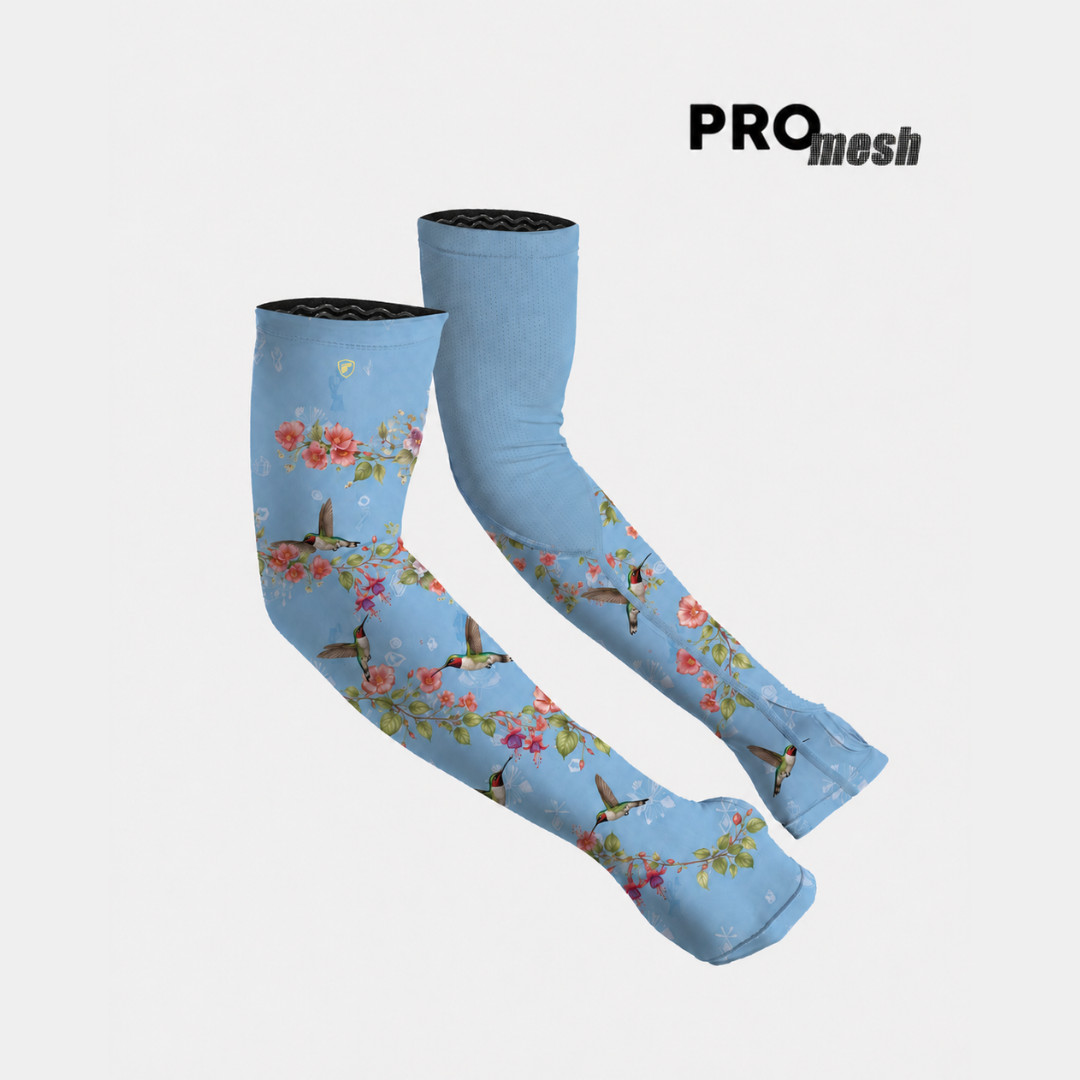
Arm sleeves are the most practical format for gardeners because they protect the most-exposed area (forearms) while allowing you to wear whatever shirt you prefer. The Farmers Defense ProMesh Protection Sleeves ($34.99) are designed specifically for this use case - UPF 50+ rated, open-mesh construction that allows airflow during active work, and patterns that look good in the garden.
UV hoodies extend protection to the torso and are practical for full-day sessions or beekeeping where complete coverage matters. The Farmers Defense UV Hoodie ($54.99) uses REPREVE performance fabric for the same UPF 50+ coverage across the full upper body.
The key advantage of UPF clothing over sunscreen for gardeners: no reapplication needed. Sunscreen requires reapplication every 2 hours and more often when sweating. Arm sleeves stay protective all session without any maintenance.
Layer 2: Gloves for Hand Protection
Hands have the most direct plant and soil contact during garden work. The right gloves depend on what you’re doing:
For pruning and heavy work (roses, woody shrubs, harvesting with tools): leather or reinforced synthetic gloves. The Farmers Defense Leather Work Gloves ($31.99) are built for this - thick enough to handle thorns and rough materials, with a cuff that overlaps with arm sleeve coverage.
For transplanting and fine work (seedlings, deadheading, seed sorting): lightweight nitrile or bamboo gloves. These allow finger dexterity while blocking soil contact and most plant oils.
The gap problem: Most gardeners don’t think about the wrist-to-glove gap. When you reach through dense plantings, this exposed area contacts thorns and plant material. Arm sleeves that extend over the glove cuff close this gap.
Layer 3: Face and Neck Protection
Sun hat: A wide-brim hat (3″ or more of brim) protects face, ears, and the back of the neck - all commonly sunburned during garden work. The Farmers Defense sun hats ($39.99-$42.99) are sized for outdoor work use.
Sunscreen on exposed areas: Face, ears, back of neck, and any other skin not covered by clothing. Apply 20-30 minutes before going outside. For gardening, a water-resistant formula holds up better during outdoor work than a standard daily moisturizer SPF.
Lip balm with SPF: Easy to forget, but the lips are vulnerable during sun exposure. An SPF 30+ lip balm is the easiest addition to a garden-day routine.
Layer 4: Insect Protection
Timing: Mosquitoes and biting flies are most active at dawn and dusk. Garden sessions during mid-morning or early afternoon have significantly lower insect pressure than early-morning or evening work.
Barrier: UPF clothing that covers the arms and torso also blocks most mosquito access to those areas. Pants tucked into socks and closed shoes prevent leg exposure.
Repellent on exposed areas: DEET is the most effective option for extended outdoor sessions. Apply to any exposed skin not covered by clothing. Picaridin is a good alternative if you prefer non-DEET options - it’s less likely to interact with watch bands, glasses frames, or synthetic fabrics.
Note: Insect repellents can degrade the elastics in clothing over time. Spray repellent on skin, not directly on clothing.
How to Protect Skin While Gardening: Plant-Specific Hazards
Poison Ivy, Poison Oak, Poison Sumac
The urushiol oil that causes the rash transfers easily from plant to skin, clothing, tools, and pet fur. A few practical rules:
- Learn to identify these plants in your area before you encounter them accidentally
- Full-coverage gloves and arm sleeves reduce (but don’t eliminate) transfer risk
- After potential contact, wash tools, gloves, and clothing immediately with cold water and soap before removing them - the urushiol needs to reach skin to cause a reaction
- Barrier creams (like IvyX Pre-Contact Skin Solution) add a layer between skin and urushiol for high-risk work
Nettles
Stinging nettles are most hazardous when brushed against - the hollow silica needles inject formic acid into skin on contact. Leather or thick synthetic gloves block nettle contact; thin nitrile or fabric gloves don’t.
Arm sleeves that cover the forearm prevent the characteristic nettle sting from reaching through plant borders or overgrown areas.
Thorned Plants
Roses, blackberries, raspberries, gooseberries, hawthorn, barberry, and many ornamental shrubs have thorns that scratch and puncture exposed skin. Beyond the immediate discomfort, thorn punctures can introduce soil bacteria. Leather gloves and arm sleeves are the practical solution here.
Euphorbia and Sap-Producing Plants
Euphorbia (spurge) sap is a strong irritant - getting it on skin causes burning and redness, and in eyes causes serious irritation. Same for some fig tree sap, rue, and various other plants with milky latex.
Wear gloves for any euphorbia work and wash skin immediately if sap contact occurs. Eye protection is worth adding for pruning euphorbia.
How to Protect Skin While Gardening: Post-Session Routine
What you do after gardening matters as much as what you wear during it:
Wash hands and arms before touching your face. Many plant oils and contact irritants transfer more easily to facial skin than they move through clothing.
Check for ticks after working in any area with tall grass, leaf litter, or dense shrubs. Focus on hairline, behind knees, underarms, and waist.
Rinse or wash UPF clothing after use if you’ve sweated heavily or used insect repellent. This extends the life of the elastic and maintains the fabric’s performance over time.
Moisturize - hands especially take significant drying from soil, water, and repeated washing during garden work.
Building a Full Skin Protection Routine for Gardening

The most effective approach combines layers that address different hazards rather than relying on a single solution:
- UPF arm sleeves as the base layer for forearm protection (sun + physical contact)
- Work gloves matched to the task (leather for heavy work, lightweight for fine dexterity)
- Wide-brim sun hat for face and neck coverage
- Sunscreen on exposed skin (face, ears, neck, hands) reapplied every 2 hours
- Insect repellent on exposed skin during high-pest-pressure hours
This layered approach means no single product has to do everything, and you can adjust each layer based on the session. A quick weeding task in morning shade might only need gloves and sunscreen; a full afternoon of thorny shrub pruning calls for the full kit.
FAQ: How to Protect Skin While Gardening
Do I need to wear sunscreen if I’m wearing UPF clothing?
UPF clothing covers only the areas it covers. Apply sunscreen to exposed skin - face, ears, neck, and hands. For areas under UPF 50+ clothing, sunscreen isn’t necessary.
What’s the difference between UPF and SPF?
UPF (Ultraviolet Protection Factor) rates fabric’s sun protection. SPF (Sun Protection Factor) rates sunscreen’s protection. UPF 50+ blocks 98% of UV; SPF 50 sunscreen blocks about 98% of UV-B (and varying amounts of UV-A depending on formulation). Both are effective for their respective uses.
How do I know if a plant is a contact irritant?
The most common ones worth knowing in US gardens: poison ivy (three-leaf clusters, white berries), stinging nettle (heart-shaped toothed leaves, fine hair-like stingers), euphorbia/spurge (milky sap when broken). If you’re unsure about a plant you’re working near, glove up and cover up.
Will arm sleeves protect against all thorn scratches?
They significantly reduce scratches from most garden thorns. Very long rose thorns or hard blackberry canes can occasionally penetrate the mesh under direct pressure, but incidental brush contact - the most common source of scratches - is blocked effectively.
For a full breakdown of the Farmers Defense arm sleeve and protective clothing range, see the Farmers Defense review. For a guide focused specifically on arm sleeve options, see arm sleeves for gardening.