Knowing how to make orchid arrangements last longer is the difference between a $155 arrangement that looks stunning for four weeks versus one that wilts in ten days. The good news: the most impactful care decisions happen in the first 48 hours, and most of them are things you’re probably getting wrong.
Orchid arrangements have an obvious advantage over most cut flowers: they last significantly longer. A quality arrangement, properly cared for, stays vibrant for two to four weeks - sometimes longer. But the gap between a two-week arrangement and a four-week one comes down almost entirely to a handful of simple care decisions made in the first 48 hours after delivery.
How long do orchid arrangements last? The baseline for a well-sourced cut orchid arrangement is two to three weeks. Potted orchid plants (phalaenopsis/moth orchids) can bloom for two to three months, then rebloom. The tips below apply to both, with specific notes where care differs.
Here’s exactly what to do - and what to avoid.
Tip 1: Find the Right Light Spot
This is the single most impactful decision. Orchids need bright, indirect light - think north or east-facing windowsill, or a few feet back from a south or west window. What they can’t handle is direct sun, which bleaches blooms and dries out stems rapidly.
A common placement mistake: a kitchen windowsill with direct afternoon sun, or a south-facing sill that bakes in summer heat. The blooms yellow or wilt within days instead of weeks.
For cut orchid arrangements in vases or hat boxes: same rule - bright but indirect. If a room gets only dim light, a south-facing spot with a sheer curtain filter works well.
For potted phalaenopsis: slightly less light is fine. They do well under standard room lighting as long as it’s consistent - inconsistent light disrupts the bloom cycle.
Quick test: Hold your hand about a foot above a piece of paper near the placement spot. If the shadow has sharp edges, it’s too direct. A soft, blurred shadow means good indirect light.
Tip 2: Water Correctly - Less Is Almost Always More
Overwatering is the most common reason orchid arrangements die early. The instinct to keep flowers in lots of water works for roses and tulips - it kills orchids.
For cut arrangements in water (vases, glass containers):
– Change the water every 2–3 days
– Keep the water level at 1–2 inches, not topped up to the rim
– Add a small pinch of floral preservative (often included with professional arrangements) to slow bacterial growth
For potted phalaenopsis:
– The ice cube method works: 3 ice cubes (for a standard 5–6 inch pot) once a week. Slow melt prevents root rot from sudden overwatering
– The roots should be silvery-green, not dark green (dark green = currently wet, silvery = ready to water)
– Never let a potted orchid sit in a saucer of standing water
For hat box or foam-based arrangements: these have floral foam that holds moisture. Check the foam every 2–3 days - it should feel damp but not soggy. Add a small amount of water if dry.
Tip 3: Control Temperature and Avoid Drafts
Orchids evolved in stable tropical climates - they don’t respond well to temperature swings. The ideal range for maintaining arrangements is 65–80°F (18–27°C). Below 60°F or above 85°F, bloom life shortens noticeably.
More importantly: avoid air movement. This is the placement mistake most people don’t think about:
- Don’t place arrangements near AC vents (cold drafts dry out blooms fast)
- Keep away from heating vents and radiators (warm dry air does the same)
- Don’t put near exterior doors or windows that open frequently
- Ceiling fans create enough air movement to speed wilting in cut orchids
The ideal spot is a stable interior location - a console table, sideboard, or dining table away from active airflow.
Tip 4: Maintain Humidity Without Overwatering
Orchids are tropical plants that prefer humidity around 50–70%. Most homes, especially in winter or with central AC running, sit at 30–40% humidity - noticeably below optimal.
How to raise humidity without creating a mold risk:
- Pebble tray method (potted orchids): Fill a shallow tray with pebbles and water. Set the pot on the pebbles (above the waterline). As water evaporates, it creates localized humidity around the plant.
- Group plants together: Clustering several plants near each other creates a micro-humid zone through shared transpiration.
- Light misting: For cut arrangements, a very light mist of water on the blooms once a day (avoid the center of the bloom) can extend freshness. Don’t soak - just a fine mist.
Avoid placing arrangements in very dry rooms like a home office with forced-air heating running constantly. A bedroom or living room typically has more stable humidity.
Tip 5: Trim Stems the Right Way
For cut orchid arrangements in vases: trim stems every 3–4 days. This is the same principle as trimming roses, but the technique matters.
- Use sharp scissors or floral shears, not a serrated knife (serrated edges crush the vascular tissue)
- Cut at a 45-degree angle - this maximizes the stem surface area exposed to water
- Trim about half an inch each time
- Do the trim while the stem is submerged in a container of water (or immediately transfer to water after cutting) - exposure to air for even a few seconds allows air bubbles to form in the stem, blocking water uptake
For potted phalaenopsis: after the blooms fall, cut the spike down to just above the second node from the base. This often triggers a secondary bloom spike rather than killing the plant.
Tip 6: Feed with the Right Fertilizer (Potted Orchids Only)
For cut arrangements, skip the fertilizer - the arrangement lifespan is too short to benefit, and it can speed bacterial growth in the water.
For potted phalaenopsis during or after bloom:
– Use a 20-20-20 balanced orchid fertilizer or a product labeled specifically for orchids
– Feed at quarter strength: dilute the recommended dose to 25% of what’s on the label
– Water-fertilize cycle: fertilize every third watering, plain water in between
– Never fertilize a dry orchid - roots need to be moist before fertilizer application or salt damage occurs
The popular “weekly, weakly” method: fertilize every week at quarter strength. This delivers nutrients consistently without the salt buildup that full-strength monthly feeding creates.
Tip 7: Start with High-Quality Orchids
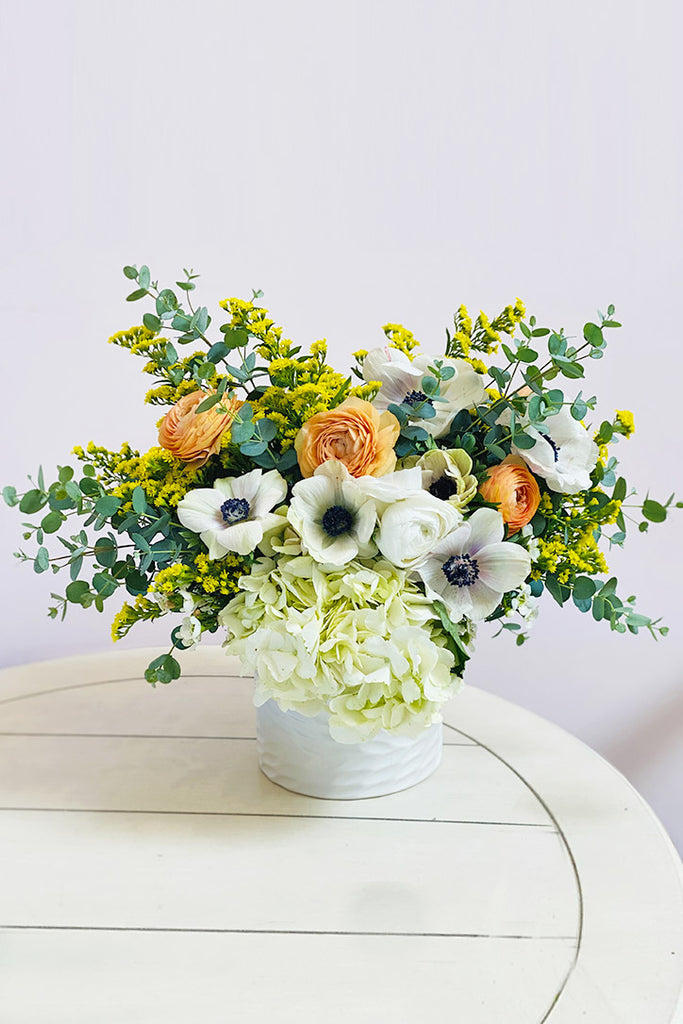
This is the tip that has the highest leverage and the least to do with anything you do at home. A low-quality orchid that’s been in distribution for two weeks before it reaches you has a fraction of the vellum left compared to a locally sourced arrangement that goes from farm to studio to your door in 48 hours.
The variables that indicate quality at the source:
– Local or regional sourcing (less time in transit)
– Temperature-controlled handling (prevents premature bloom opening)
– Professional cut and condition (stems cut correctly, placed in preservative solution immediately)
This is specifically why boutique florists like Orchid Republic - who source from local Carpinteria, CA farms and deliver via temperature-controlled vans - produce arrangements that last noticeably longer than mass-market alternatives. The care chain starts at the farm, not at your door.
If you’re buying orchids for home decor or gifting and longevity matters, the source quality is worth paying for. For a detailed breakdown of their arrangements and ordering experience, see our Orchid Republic review.
How to Make Orchid Arrangements Last Longer: FAQ
How long do orchid arrangements typically last?
A quality cut orchid arrangement lasts 2-4 weeks. Potted phalaenopsis orchids bloom for 2-3 months and can rebloom. The biggest variable is source quality - locally sourced orchids last noticeably longer than those shipped from overseas distribution centers.
Can I revive a wilting orchid arrangement?
Sometimes. For cut arrangements, re-trim the stems at a 45-degree angle underwater, change the water completely, and move to a spot with bright indirect light away from drafts. Wilting from overwatering or root rot is harder to reverse in cut flowers.
Do orchid arrangements need special care compared to other flowers?
Yes in two ways: they need less water (not more) and they’re more sensitive to air movement. Most flowers tolerate a range of conditions; orchids die faster in direct sun, drafts, or overwatered vases than roses or tulips would.
Final Thoughts
Most orchid arrangements that die early die because of one of three mistakes: too much direct sun, overwatering, or air drafts. Avoid those three and you’ve solved most of the problem. The remaining tips - humidity management, stem trimming, and correct fertilizing for potted plants - extend the advantage of starting with a quality arrangement.
The two-to-four-week window is achievable for almost any cut orchid arrangement. With a locally sourced, properly handled arrangement and the care routine above, four weeks is realistic.
For more on incorporating orchids into your space year-round, the orchid home decor guide covers room-by-room placement and which arrangement styles work for which interior aesthetics.