The home decor trends 2026 brings are unanimous: done with minimalism. After years of white walls, clean lines and “less is more,” interiors are going warmer, bolder and far more personal. Think hand-crafted textiles, animal-motif statement pieces, rich natural materials and rooms that feel curated rather than staged.
The good news? This shift toward maximalist coziness is one of the most budget-accessible turns interior design has taken in years. You do not need to replace furniture. You need the right anchor pieces. For a deeper look at the brand leading this charge, read our Maia Homes review or the room-by-room home glow-up guide.
Why Home Decor Trends 2026 Favor Maximalism
Minimalism had a long run. But designers and homeowners alike have started talking about the same problem: spaces that feel sterile, impersonal and oddly stressful to live in. The pendulum has swung.
The home decor trends for 2026 that designers and tastemakers are calling out share a few threads:
- Handcraft over mass production. Consumers want to see the human touch. Hand-tufted rugs, hand-carved wood, hand-thrown ceramics. Objects that carry a story.
- Nature brought inside. Animal motifs, botanical prints, organic shapes, jute and natural fibers. The outside world as interior inspiration.
- Warmth over neutrals. Terracotta, warm ivory, burnt amber, dusty gold. Colors that make a room feel like somewhere you want to stay.
- Layering and pattern mixing. The most admired rooms on design platforms in 2026 are unapologetically layered — patterns on top of patterns, textures on top of textures.
- Investment in surfaces. The floor and walls now do more heavy lifting than furniture. A great rug or piece of wall art can transform a room faster and cheaper than any sofa upgrade.
The Statement Rug: Trend #1 in 2026
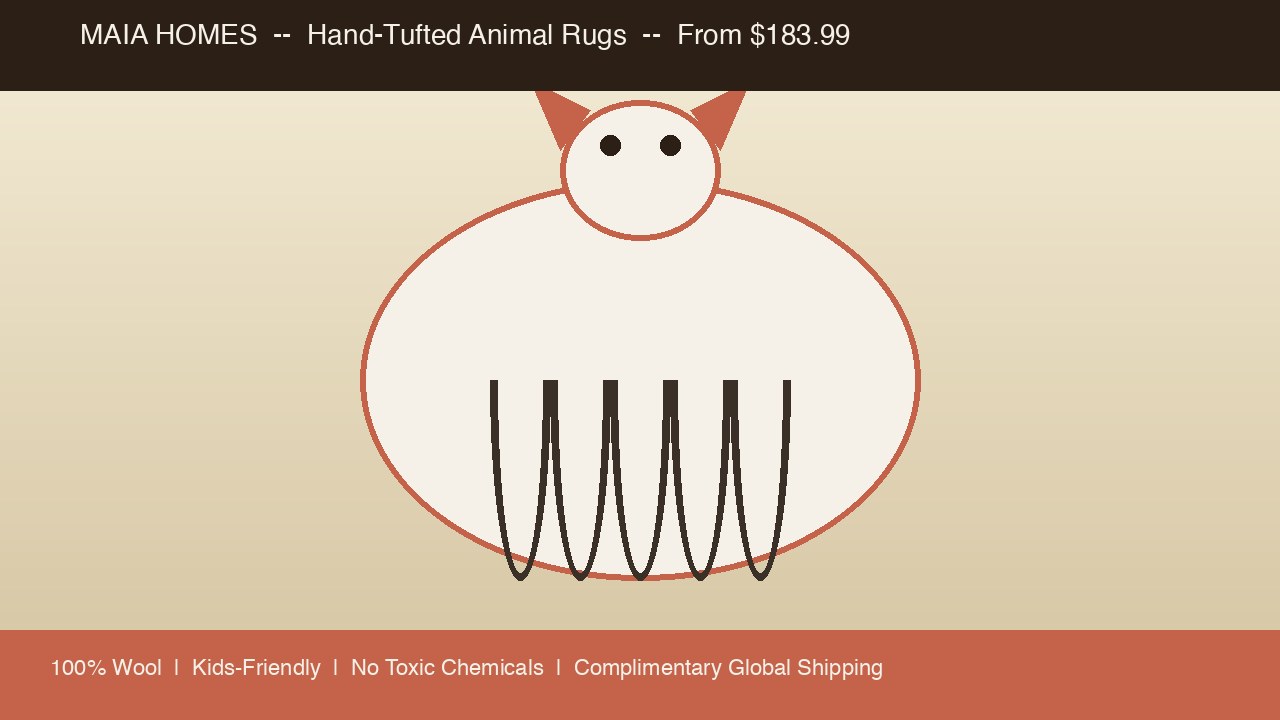
If there is one home decor trend of 2026 that unifies everything else on this list, it is the statement rug. Interior designers have been saying for years that the rug is the most underrated element in any room — it anchors the furniture, defines zones in open-plan spaces and sets the entire color story. In 2026, that advice has finally gone mainstream.
What makes a statement rug in 2026?
- Animal motifs and sculptural shapes. The most shared rugs on design platforms are not flat rectangles. They are shaped like tigers, leopards, zebras and deer — pieces that blur the line between functional floor covering and art installation.
- Hand-tufted construction. The technique that gives a rug its depth, texture and the slightly raised surface that catches light differently across the day. Machine-made rugs cannot replicate it.
- Natural wool. Warm to the touch, naturally durable and with a visual weight that synthetic fibers cannot match.
The brand interior designers keep recommending for exactly this category is Maia Homes, billed as the “#1 Interior Designers’ Choice for Maximalist Rugs.” Their hand-tufted wool rugs — including the iconic tiger, leopard, zebra and deer-shaped accent pieces — are the pieces you have been seeing all over design feeds this year.
The Snow Tiger Rug and Leopard Shaped Accent Wool Rug (both $224.99, on sale from $452.99) are entry points into statement-rug territory at a price point that genuinely surprises people when they hear it. They are hand-crafted, made from 100% wool, free from toxic chemicals and safe for kids — the combination that makes them work as practical home pieces rather than display-only art.
👉 Browse Maia Homes statement rugs — complimentary global shipping →
Trend #2: Natural Fibers Everywhere
Jute. Sisal. Seagrass. The 2026 home interior is leaning hard into natural, sustainable fibers — and not just in rugs. Natural fiber baskets, woven wall hangings, rattan accents and linen throws are all part of the same story: the desire for materials that feel honest and grounded.
In practical terms:
- Jute rugs in round or oval formats are having a major moment. They work in entryways, under dining tables, in sunrooms and layered under a larger wool rug.
- Round shapes specifically are trending over the traditional rectangle. They soften angular furniture arrangements and work in corners and small spaces rectangles struggle with.
- Natural undyed colorways — tan, flax, warm grey — pair with almost anything and let bolder accent pieces do the talking.
Maia Homes’ range of round jute rugs — available in colors including blue, turquoise, red, green, grey and warm natural tones — covers the entire spectrum of this trend at accessible price points. A round jute rug under a dining chair, layered with a smaller statement wool piece elsewhere in the room, is the double-layer flooring technique designers are using constantly in 2026.
Trend #3: Hardware as Decor
2026 is the year people noticed that their door handles, cabinet knobs and key holders are part of the room’s story. Brass hardware has become a statement element in its own right.
Solid brass animal motifs — cobras, peacocks, parrots, giraffes — are appearing on cabinet doors, drawer fronts and entryway walls as functional sculpture. The appeal is exactly what you would expect from the broader maximalism trend: the handcrafted, slightly fantastical detail that makes a room feel like it belongs to someone specific.
Maia Homes’ range of solid brass hardware — including the Isis Egyptian Goddess Candelabra, peacock door knobs, parrot tree door pulls and giraffe handles — brings this trend into reach without custom fabrication. These are the details that make a kitchen or bathroom feel genuinely designed rather than assembled from a big-box store.
Trend #4: Sculptural Decorative Objects
The decorative object had a tough decade. Minimalism turned the shelf into a sparse stage set. In 2026, the shelf is busy again — but curated busy, not cluttered busy.
The distinction is intentionality. Each object should either be genuinely beautiful, genuinely meaningful or genuinely interesting. Sculptural pieces that earn their place:
- Classical forms — the Apollo Belvedere bust sculpture brings an art-history gravitas that works surprisingly well against maximalist backgrounds.
- Botanical elements — silk cherry blossom branches (in both white and pink) add movement and height without requiring maintenance.
- Architectural textures — hand-carved wooden pieces like the Chakki coffee table or the Maharaja chair are statement furniture that doubles as decor.
The common thread is craft. Mass-produced decorative objects increasingly read as filler. Hand-crafted objects with visible making carry weight in a room.
Trend #5: The Warm, Personalized Gallery Wall
Gallery walls went through a long period of being either perfectly gridded (very 2015) or completely random (the reaction to the grid). In 2026, the gallery wall has found its tone: warm, layered and personal.
What that means in practice:
- Mix of frame sizes but a unified color palette (warm blacks, antique gold, natural wood tones)
- A combination of art prints, mirrors and three-dimensional objects mounted flat
- At least one piece that does not look like it came from a mass-market store
The floor-to-ceiling, room-is-the-gallery approach — where the rug, the wall, the hardware and the decorative objects all speak the same language — is the interior design move that 2026 is making its own.
Budget Breakdown: How to Invest in Trending Decor
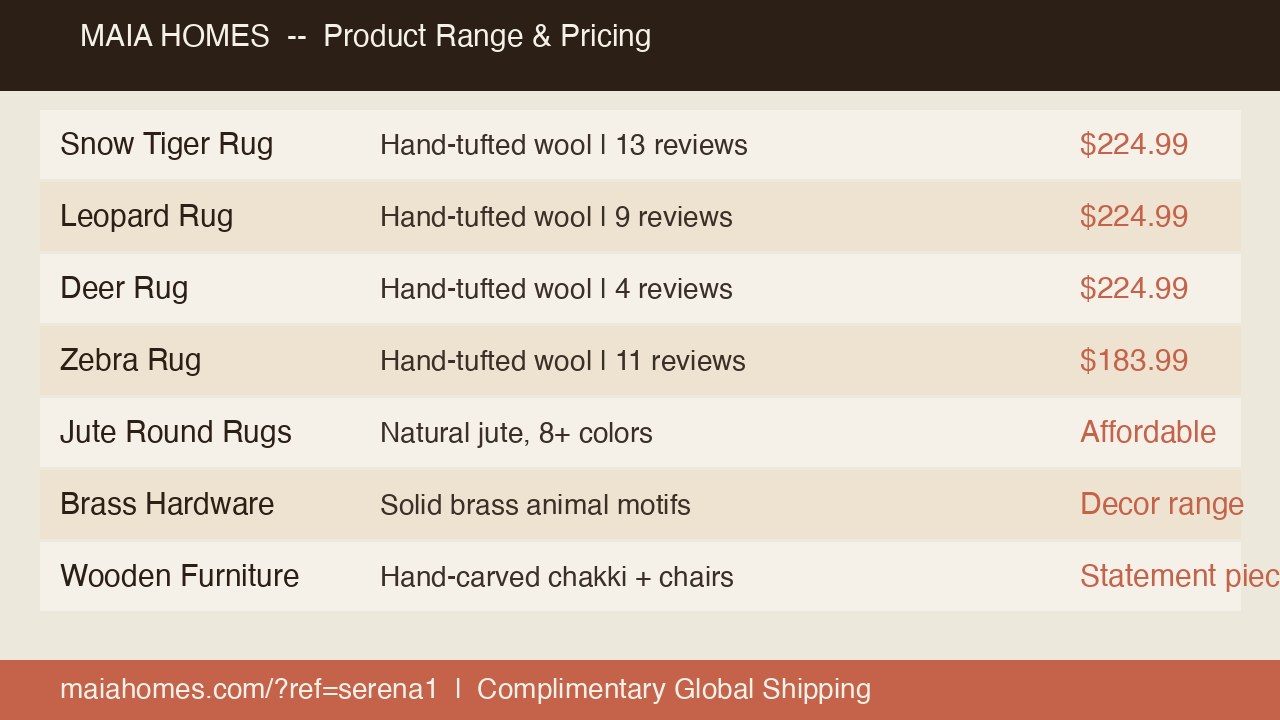
The honest question behind every trend piece is: what does this actually cost? Here is how the home decor trends of 2026 map to real budget tiers.
Under $50: Botanical accents (silk branches, small ceramic objects), a round jute rug in a smaller size, brass cabinet knobs. These are the micro-swaps that update the room without touching the layout.
$50-$200: A quality jute round in a medium size, statement wall art, a small sculptural object. At this tier you can make a genuine room impact in one purchase.
$200-$300: This is the entry point for hand-tufted wool statement pieces. The Maia Homes Zebra Accent Wool Rug at $183.99 (on sale from $452.99) is the clearest example — a genuine hand-crafted piece at a price that competes with mass-market alternatives.
$300-$500: The full statement rug range — the Snow Tiger, Leopard and Deer designs at $224.99. At this price point you are getting hand-crafted construction, 100% wool, no toxic chemicals and a piece that interior designers actually specify for client homes.
The Maia Homes approach — craft and materials quality at prices significantly below what similar bespoke pieces would cost — is exactly why the brand has become the recommendation designers make when clients have real taste but realistic budgets.
How to Start: One Room, One Statement Piece
The paralysis of “I want to update my space but I do not know where to start” has one reliable cure: pick one room and buy one statement piece. Let everything else follow.
The most reliable statement pieces for immediate visual impact, in order:
- A shaped, hand-tufted area rug (the room anchor — highest impact per dollar)
- A sculptural decorative object that earns its shelf space
- Brass hardware replacement on one set of cabinets or doors
- A wall piece that is art, not decoration
Start with the rug. It changes the temperature of the entire room without moving a single piece of furniture.
Home Decor Trends 2026 FAQ
What are the biggest home decor trends in 2026?
The dominant trends in 2026 are maximalism over minimalism, hand-crafted natural materials (wool, jute, brass, carved wood), animal motifs and statement rugs, warm earthy color palettes and layered, personalized interiors. The throughline is craft and personality over sterile uniformity.
Are statement rugs worth the investment?
Yes — and especially hand-tufted wool rugs. A quality statement rug anchors the furniture, defines the room’s color story and lasts for years. It typically delivers more visual impact per dollar than any furniture upgrade in the same price range.
What is the difference between hand-tufted and machine-made rugs?
Hand-tufted rugs are made by pushing wool through a backing fabric using a tufting gun, then hand-finishing. The result has depth, texture and a slightly sculptural surface that machine-made rugs cannot replicate. They also tend to use higher-quality materials — like the 100% wool used in Maia Homes’ collection.
How do I style a maximalist room without making it feel cluttered?
The key is intentionality. Every object should be genuinely beautiful, meaningful or interesting — not just present. Start with one strong anchor piece (usually the rug), build the color palette from it, and add objects that speak the same visual language. Clutter happens when things do not relate to each other; maximalism happens when they do.
Where can I buy statement rugs that look designer but cost less?
Maia Homes is the brand interior designers keep referencing for exactly this. Their hand-tufted wool rugs — shaped like tigers, leopards, zebras and deer — start from $183.99 (on sale from $452.99) with complimentary global shipping. Featured in Design Milk and Remodelista, and with a trade program that serves professional designers, they are the affordable route to genuinely impressive statement pieces.