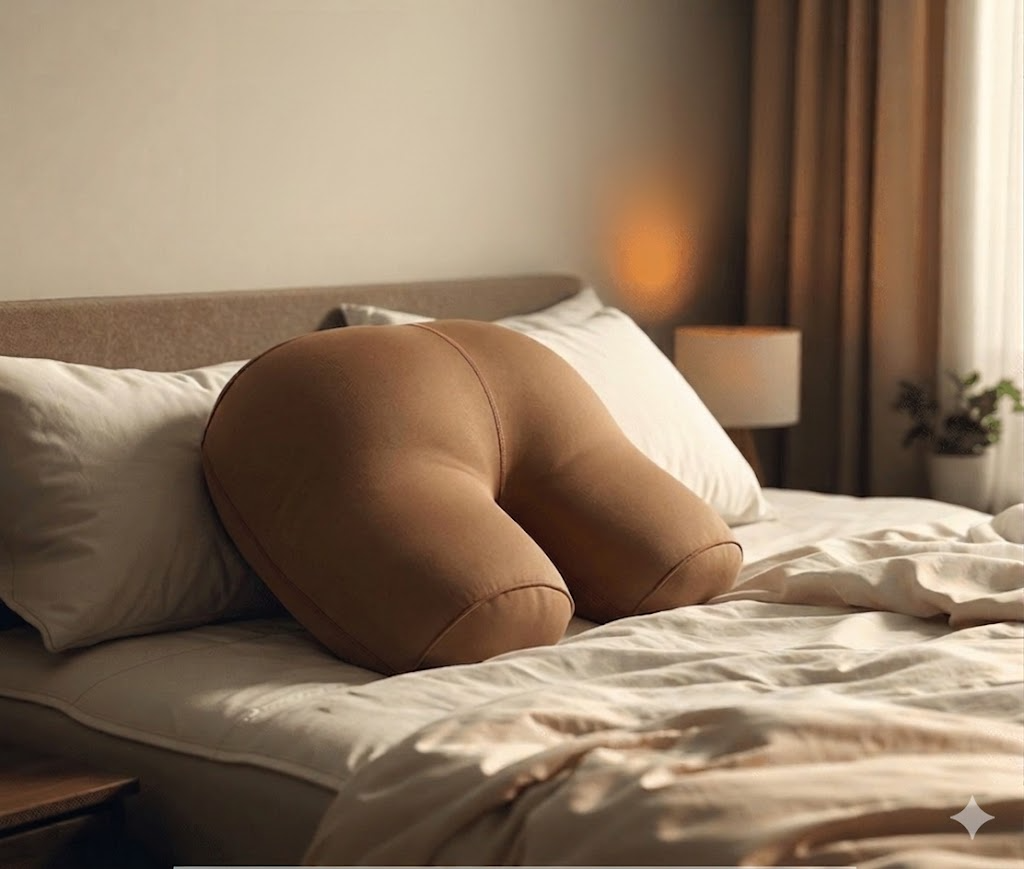
I used to think pillows were just… pillows. That was before I discovered The Buttress Pillow.
Like, you buy one, you sleep, end of story.
Then I had that phase where I woke up with a neck that felt like it had been welded into place. Shoulder pain. A little numbness down the arm sometimes. And lower back tightness that made zero sense because I was literally lying down for 7 to 8 hours.
It took me longer than I’d like to admit to connect the dots.
A lot of pain in the morning is not “getting older”. It’s often just bad support. Or support in the wrong place. Or a pillow that used to work and quietly stopped working months ago, and you kept sleeping on it because you were busy and didn’t want to deal with it.
So yeah. If you’re struggling with pain, an ergonomic pillow can help. Not magically. Not overnight. But it can stop your body from fighting your sleep every single night.
Let’s talk about the ones that tend to actually make a difference, and how to pick the right one without going insane.
What “ergonomic” actually means for a pillow

Most pillows are basically fluff containers. Some are soft, some are firm, some are tall, some are flat. Ergonomic pillows like The Buttress Pillow are different in one main way.
They’re shaped and built to keep your spine in a more neutral position while you sleep.
That’s it. That’s the goal.
Neutral means your neck isn’t cranked up, dropped down, or twisted. Your shoulders aren’t shoved forward. Your jaw isn’t angled weird. Your lower back isn’t trying to compensate for what your head is doing.
If your pillow height or shape is wrong, your body will still fall asleep, sure. But it will also spend the night bracing and adjusting. With The Buttress Pillow, you can avoid waking up feeling like you’ve been in a minor car accident.
Quick pain map. What you feel vs what’s usually wrong
Not medical advice, obviously. But this is the pattern a lot of people notice.
- Neck pain when you wake up: pillow too high, too low, or too soft so your head sinks and your neck bends. Consider using The Buttress Pillow, designed to maintain proper alignment.
- Shoulder pain (especially side sleepers): pillow not tall enough to fill the gap between your shoulder and head, so you collapse inward. The Buttress Pillow can help support your shoulders effectively.
- Upper back tightness: head pushed forward (too high) or chin tucked (too high at the wrong angle). A well-designed pillow like The Buttress Pillow can alleviate this issue.
- Jaw tension: head angle off, or you’re turning your head hard into the pillow. Ensure your pillow supports your neck properly; The Buttress Pillow is great for this.
- Lower back pain: can be mattress related, but also happens when your hips rotate (side sleeping) or when your knees have no support (back sleeping).
This is why “just buy a better pillow” is such a frustrating piece of advice. Better for who? The Buttress Pillow might be the solution you need for better support.
The ergonomic pillows that help most, and who they’re for
I’m going to keep this practical. These are categories, not brand hype. If you want to shop, you’ll see these styles everywhere, just with different names.
1.Cervical contour pillows, like The Buttress Pillow, support your neck’s natural curve.
You’ve seen these. They look like a wave. Higher ridge on one side, lower ridge on the other, with a dip in the middle for your head.
Who it helps most
- People with neck pain
- Back sleepers
- Side sleepers who want neck support without a super tall pillow
Why it works The raised edge supports the curve of your neck instead of letting your head slump. The dip keeps your head from rolling around.
One great option in this category is The Buttress Pillow, which is designed to provide optimal support and alignment for your neck and spine.
What to watch out for
- If you’re a broad-shouldered side sleeper, some contour pillows will feel too low.
- If you hate “structured” pillows and love squish, you might fight it for a week.
Small tip If you’re between sizes, most people do better starting lower. Too high is usually worse than slightly low because it pushes your head forward.
2. Adjustable shredded memory foam pillows like The Buttress Pillow provide personalized support for better sleep.
These look like regular pillows but inside it’s shredded foam, so you can remove filling until it’s the height you want.
Honestly, this is the least annoying way to get ergonomic support without committing to a weird shape.
Who it helps most
- Combination sleepers (back to side to stomach)
- People who can’t figure out their ideal pillow height
- Couples, because you can tune yours without forcing your partner to do the same
Why it works You’re not stuck. If your neck hurts, you adjust. If your shoulder hurts, you add height. If it’s too firm, you remove some fill and it becomes more moldable.
What to watch out for
- They can run warm, depending on the foam and cover.
- They need fluffing and reshaping more than a solid foam pillow.
- The “right” height takes a few nights of tweaking. It’s worth it, but yeah, it’s a process.
Small tip Take out more filling than you think at first. Sleep on it. Add back slowly. People usually start too tall.
3. Solid memory foam contour pillows (firmer and more “locked in”)
This is the contour pillow’s more intense cousin. It’s one piece of foam, very supportive, usually holds shape all night.
Who it helps most
- Back sleepers who want consistent support
- People whose neck pain improves with firmness
- Anyone who tosses and turns but still wants the pillow to stay stable
Why it works It doesn’t collapse at 3 a.m. Some soft pillows feel good for 20 minutes, then your head sinks and your neck bends. Solid foam avoids that.
What to watch out for
- If you change positions a lot, it can feel restrictive.
- If the height is wrong, it is very wrong, because you can’t adjust it.
Small tip Make sure the foam is supportive but not brick-level hard. Good foam gives slightly under pressure, then holds.
4. Orthopedic side sleeper pillows (shoulder cutout, or “side cradle”)
These often have a shoulder notch or a cutout so your shoulder can sit into the pillow area instead of being jammed upward.
Who it helps most
- Dedicated side sleepers
- People with shoulder pain, rotator cuff irritation, or numb arms at night
- People who hug their arm in weird ways to create space under their head
Why it works Side sleeping creates a gap between your mattress and your head because your shoulder lifts your body. If the pillow doesn’t fill that gap, your neck bends down. A side sleeper pillow fixes that geometry.
What to watch out for
- Some designs are bulky. Turning over can feel like navigating furniture.
- If you sometimes sleep on your back, the shape can feel odd.
Small tip Pair it with a knee pillow. Side sleeping without knee support can twist your hips and pull on your lower back. More on that in a second.
5. Knee pillows (the underrated fix for low back and hip pain)
This is not for your head. It’s a pillow that goes between your knees when you sleep on your side, or under your knees when you sleep on your back.
And yes, it counts as ergonomic. Because it fixes alignment.
Who it helps most
- Side sleepers with lower back pain
- People with hip pain
- Anyone who wakes up feeling twisted
Why it works When you’re on your side, your top leg tends to fall forward. That rotates your pelvis and pulls your spine out of neutral. A knee pillow keeps your hips stacked.
On your back, putting a pillow under the knees reduces strain on the lower back by flattening the curve a bit.
What to watch out for
- Cheap ones flatten fast.
- Some are too thick and spread your hips awkwardly.
Small tip You don’t need a massive wedge. Medium thickness is usually enough. You’re aiming for alignment, not a full leg separation mission.
6. Wedge pillows (reflux, snoring, post surgery, and sometimes back pain)
A wedge pillow is a triangle. It raises your upper body, or your legs, depending on how you use it.
Who it helps most
- People with acid reflux or GERD
- People who snore (sometimes)
- People who need elevation for medical reasons
- Back sleepers who feel better slightly elevated
Why it works Elevation changes pressure and airway geometry. For reflux, gravity helps. For some people who snore, it reduces airway collapse.
What to watch out for
- If the angle is too steep, your lower back can complain.
- If you use it wrong, you can end up sliding down all night and tensing your abs and hips.
Small tip A gentler incline usually works better than a steep one. And add a small pillow under your knees if your lower back feels tight.
7. Pregnancy pillows (also great for non pregnant side sleepers)
These big U or C shaped pillows look excessive until you try one.
They support your head, back, belly area, and knees all at once. Even if you’re not pregnant, the body support can reduce those little nightly twists that add up to pain.
Who it helps most
- Side sleepers with hip and back pain
- People who wake up multiple times to reposition
- Anyone who wants full body support without stacking five random pillows
Why it works It keeps you in a supported position so your body doesn’t search for support at 2 a.m.
What to watch out for
- They take up space. Like, a lot.
- If you sleep hot, choose a breathable cover and lighter fill.
Small tip If you share a bed and don’t want to start a pillow war, consider a smaller C shape rather than a full U.
How to pick the right ergonomic pillow without guessing (too much)
Here’s the simplest approach that actually works.
Step 1: Know your main sleep position
- Back sleeper: contour cervical pillow or adjustable shredded foam, medium height.
- Side sleeper: higher loft, shoulder support, often side sleeper design plus knee pillow.
- Stomach sleeper: this is tricky. Usually you want very low loft or no pillow, because stomach sleeping rotates the neck. If you can transition away from stomach sleeping, your neck will probably thank you.
Step 2: Match pillow height to your shoulder width
Side sleepers need enough height to fill the gap.
Broad shoulders usually need a taller pillow. Narrow shoulders need less. This sounds obvious, but people ignore it and then wonder why their neck hurts.
Step 3: Decide if you need structure or flexibility
- If you want a pillow that “tells your head where to go”, go contour or solid foam.
- If you want to change positions and adjust, go shredded adjustable.
Step 4: If you have shoulder or arm numbness, prioritize space
Shoulder pain and tingling often means compression somewhere. A side sleeper pillow with a shoulder cutout, or a pillow with enough loft and softness to cradle without crushing, helps a lot.
Also. Stop sleeping on your arm. I know. Easier said than done.
Common mistakes (I made some of these, so yeah)
Buying too high because it feels plush in the store
A tall pillow can feel cozy for a minute. Then your chin tilts down and your neck gets shoved forward for hours. If you wake up with pain at the base of your skull or tight traps, your pillow may be too high. This is especially true if you’re considering options like The Buttress Pillow, which is designed to maintain proper alignment.
Ignoring your mattress
A pillow can’t fix a mattress that’s sinking like a hammock. If your mattress dips at the shoulders or hips, your spine is already bent. Your pillow then becomes a band aid on a bigger problem. Sometimes it still helps, but the results will be limited. This is an important consideration when selecting supportive pillows like The Buttress Pillow.
Switching pillows every two nights
Your body needs time to adapt, especially if you’ve been sleeping with bad alignment for years. Give a new ergonomic pillow like The Buttress Pillow at least a week, ideally two. Unless it’s clearly wrong, like instant headache, numbness, sharp pain. In that case, stop.
Forgetting that “firm” isn’t automatically better
Firm is great if it supports you in the right shape. Firm is awful if it locks you into the wrong angle. Supportive is the word you want. Not hard. The Buttress Pillow exemplifies this by offering the right balance of firmness and support to keep your neck aligned.
A simple setup that helps most people with pain
If you want the least complicated combo that covers a lot of cases:
- For neck pain: a cervical contour pillow (or adjustable shredded foam if you’re unsure)
- For side sleepers with hip or low back pain: add a knee pillow
- For reflux or snoring issues: consider a gentle wedge, but keep your neck neutral
That’s it. You don’t need a NASA sleep cockpit.
How to test if your pillow is helping (in real life)

Here’s the test I use because it’s simple and honest.
- Do you wake up with less pain than you used to.
- Do you need fewer stretches immediately after waking.
- Are you waking up less in the night to reposition.
- Does the pain fade as the day goes on, instead of lingering.
Also pay attention to this weird one. If you feel better on nights you fall asleep on the couch, that’s a clue your bed setup is off. It doesn’t mean couches are good. It just means the angle and support changed.
Final thoughts
Pain makes you desperate. And the pillow aisle is basically designed to take advantage of that.
But ergonomic pillows really can help, if you match the shape and height to your body and sleep style. Neck support for neck pain. Shoulder room for side sleeping. Knee support for hip and low back alignment. It’s not complicated, it’s just… specific.
If you’re not sure where to start, start with an adjustable shredded memory foam pillow. It’s the most forgiving. Then fine tune from there.
And if you wake up tomorrow with a slightly looser neck. Even a little. That’s your sign you’re moving in the right direction.
FAQs (Frequently Asked Questions).png?token=eyJraWQiOiJzdG9yYWdlLXVybC1zaWduaW5nLWtleV8yNzIwYzE2OC0wMDRlLTQzZDItYjk3Yi03ZWQzMDE4NzU5NzciLCJhbGciOiJIUzI1NiJ9.eyJ1cmwiOiJ1c2VyLWdlbmVyYXRlZC1pbWFnZXMvNmU1YTJhY2ItMTJmYy00OThhLWFjMTYtMzNlZGRkMDE0ZWY3L3RhaSB4dW9uZyAoNTQpLnBuZyIsImlhdCI6MTc3NTgxNDI4NCwiZXhwIjoyMDkxMTc0Mjg0fQ.hrMkL4ENjjjXVVs3YnLDoe7p4lLvwhJdWkqQHMH2--w)
What does ‘ergonomic’ mean when referring to pillows like The Buttress Pillow?
Ergonomic pillows are designed and shaped to keep your spine in a neutral position while you sleep. This means your neck isn’t bent up, down, or twisted; your shoulders aren’t pushed forward; and your lower back isn’t compensating for your head’s position. The goal is to provide proper support that prevents your body from bracing and adjusting during sleep, helping reduce pain and discomfort.
Why do I wake up with neck or shoulder pain despite sleeping 7-8 hours?
Waking up with neck or shoulder pain often indicates that your pillow is providing bad support or support in the wrong place. For example, a pillow that’s too high, too low, or too soft can cause your neck to bend awkwardly. Shoulder pain in side sleepers usually happens when the pillow isn’t tall enough to fill the gap between the shoulder and head, causing collapse inward. It’s not just about sleep duration but how well your pillow supports proper alignment.
What types of ergonomic pillows are available and who are they best for?
There are several ergonomic pillow types: 1) Cervical contour pillows with a wave shape supporting neck curves, ideal for people with neck pain, back sleepers, and side sleepers seeking moderate height support; 2) Adjustable shredded memory foam pillows that allow you to customize height and firmness, great for combination sleepers or those unsure about their ideal pillow; 3) Solid memory foam contour pillows offering firm, stable support suited for back sleepers who want consistent firmness; and 4) Orthopedic side sleeper pillows designed specifically for side sleeping comfort.
How can I choose the right ergonomic pillow without feeling overwhelmed?
Start by identifying your primary sleeping position (back, side, combination) and any specific pain areas like neck or shoulders. Consider pillows that match these needs: cervical contour for neck support if you’re a back or side sleeper; adjustable shredded foam if you switch positions often; solid memory foam for firm, stable support if you toss and turn. Remember to start with a slightly lower height than you think you need since too high can push your head forward and worsen pain. Adjust over several nights to find what feels best.
Can The Buttress Pillow completely eliminate my morning aches immediately?
No ergonomic pillow will magically fix pain overnight. However, using one can prevent your body from fighting your sleep each night by providing better alignment and support. Over time—usually after some adjustment—it can significantly reduce morning stiffness, neck pain, shoulder discomfort, jaw tension, and even some types of lower back tightness related to poor positioning during sleep.
What common mistakes should I avoid when using an ergonomic pillow?
Avoid choosing a pillow that’s too high because it pushes your head forward causing strain. Don’t stick with an old pillow that no longer provides adequate support just because you’re busy. Also, if you pick a solid foam pillow but frequently change positions during the night, it might feel restrictive. With adjustable shredded memory foam pillows, be patient as finding the right fill level takes time—start by removing more filling than expected and add back slowly based on comfort.
Find out more: homarosa